
Ad Disclosure
Five Takeaways From the Ben Simmons Propaganda Documentary

By Sean Barnard
Published:
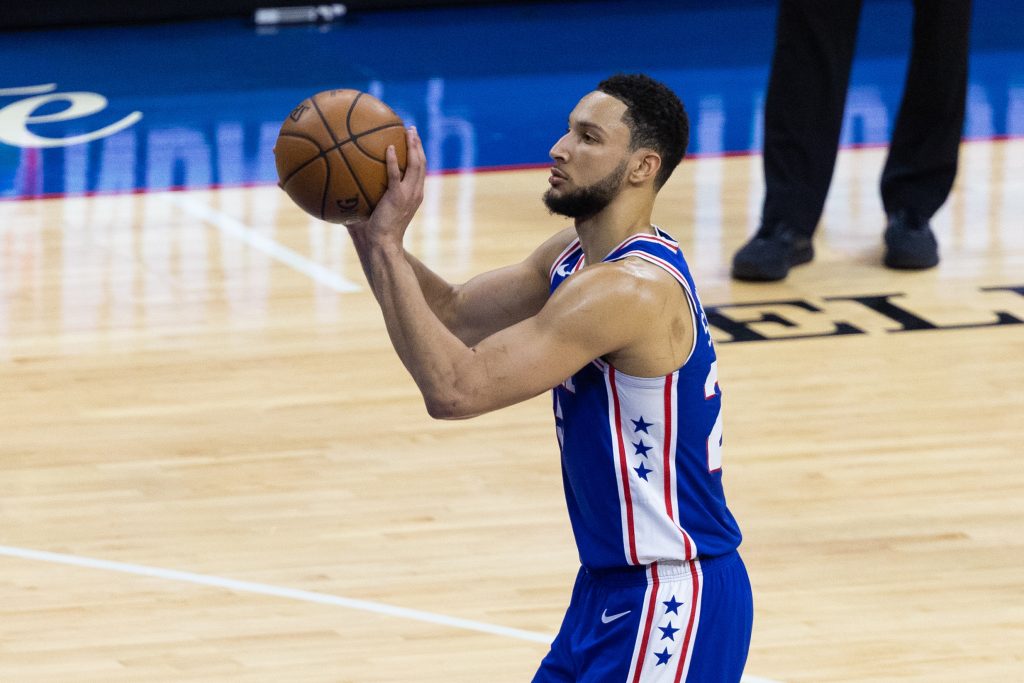
The Philadelphia 76ers have kicked off the season in pursuit of a championship with arguably the most talented roster the franchise has ever assembled. But it’s been a long, winding path to get here, with plenty of key players failing to live up to their potential as franchise cornerstones. Headlining this conversation is former first overall pick Ben Simmons.
But the Fresh Prince recently opened up about the behind the scenes in Philadelphia during a recent ESPN E60 documentary in partnership with Andscape, called Being Ben. This was also dropped in preparation for the expected comeback effort as Simmons was on the cusp of making his NBA return with the Sacramento Kings.
Unfortunately, just days before the season kicked off, Simmons suffered a torn Achilles tendon during practice. The injury was announced shortly after the documentary’s release, dealing another devastating blow to his comeback attempt. For what it’s worth, Simmons looked largely encouraging in his preseason play and appeared to be in line for a notable role on a Sacramento roster in need of talent:
This is brutal timing for Simmons and another unfortunate hurdle in his potential NBA return. He last stepped on an NBA floor on April 29, 2025th, when he played 4:42 off the bench for the Los Angeles Clippers during their first-round playoff exit. Much of the documentary focused on his journey to get healthy, and the film was surely intended to serve as a launching point for his expected return this season.
But the bulk of the film focused on Simmons’ time in Philadelphia and the frustrating exit that occurred. This is the more notable storyline for myself and Crossing Broad. After watching the entirety of the ESPN documentary twice, here are the five biggest takeaways that stood out to me.
5. The Sixers Organization Was Far From Perfect
This shouldn’t be breaking news by any means.
The Process was one of the most polarizing eras surrounding any sports franchise. There were plenty of critics at the time, and it feels like only more have come out of the woodwork since.
“Nobody wanted to be in Philly,” Simmons put it in the documentary, setting the stage for being selected first overall in the draft. “Nobody. Like, Philly was a joke.”
Plenty of the dysfunction occurred before the former All-NBA player even arrived. Simmons did not dive too deep into it, only touching the tip of the iceberg on the time while he was there. It should also be noted that Simmons missed the entirety of his rookie season with a broken foot. But there was a notable anecdote told by Keith Pompey that showed a bit of what the expected Sixers’ star’s mindset was the next season following the addition of Markelle Fultz:
4. Why Wasn’t Joel Embiid Included?
Perhaps the biggest thing that stood out to me in the documentary was the lack of mention of Joel Embiid. This was something I had my eyes on going in, and ultimately the documentary came up empty-handed. After watching the film in its entirety twice and skimming through a third time, I believe Simmons mentions Embiid’s name once in passing.
Embiid appears in background highlights, and it’s impossible to separate him from Simmons’ story entirely. But the three-time All-Star never really dives into his relationship with his former teammate, either at the time or in the present day. Given how much of the story focused on his Philadelphia tenure, that omission feels intentional.
Perhaps this says more about the real story than anything Simmons could have said on the topic. There was always some friction between the two players viewed as the franchise’s hopeful cornerstones, and maybe one day we’ll get a genuine peek behind the curtain.
One went on to win league MVP in his first full season without his former co-star. The other has played just 108 total NBA games across the five seasons since.
3. The Doc Rivers and Daryl Morey Era Was Scapegoated More Than Expected
Simmons made a clear, pointed effort to portray Doc Rivers and Daryl Morey as driving forces behind the collapse of his career. Rivers joins the list of human beings who seem to believe they’ve never done anything wrong in their lives, although much of his recollection in the documentary was consistent with reality.
“I had him for one year,” Rivers stated. “Maybe the best year of his career. I was the first guy to put the ball in his hands and say, ‘You’re a point guard.”
There is some truth to Simmons being leaned on as point guard at a greater rate under Rivers. However, it was far from a new concept for Simmons to be the lead playmaker in the offense, as has been the case for the bulk of his life.
If anything, I would argue the roster around him dictated this additional responsibility with Jimmy Butler no longer on the team (who was never mentioned in the documentary) and guys like T.J. McConnell having left. During his lone season playing under Rivers, Simmons averaged 14.3 points, 7.2 rebounds, and 6.9 assists per game. His scoring and rebounding averages were career lows at the time, although his assist average was not. It was still a solid season in which he earned All-Star and All-NBA honors, but it’s unfair to credit Rivers with taking his game to new levels in the way the documentary presented it.
The passed-up dunk against Trae Young and the Atlanta Hawks was a clear turning point in the documentary, just as it was in Simmons’ NBA career.
Simmons didn’t exactly back down from his decision to pass the ball, bringing up how different the perception might have been if Matisse Thybulle had knocked down both free throws. Thybulle went 1-for-2 at the line following this pass. When Marc Spears told Simmons that Young had admitted he was planning on fouling him, Simmons replied, “Yeah, I read it. I figured he was going to try to do it.” –
The documentary focused heavily on Rivers’ interaction with the media following the playoff elimination. It was a stunning moment when the Sixers’ head coach admitted that he didn’t know whether Simmons could be a championship point guard, which the former Rookie of the Year understandably took exception to. It was also entertaining to hear Rivers try to spin the situation by arguing that his quote had been taken out of context.
“I didn’t mean the way it was taken,” Rivers put it.
Keith Pompey did a nice job of providing context during the documentary, particularly in this portion. It should be made abundantly clear that few, if any, members of the Sixers organization defended Simmons as publicly and consistently as Rivers did during his time as head coach. Rivers would publicly challenge fans and media members alike whenever a critical question surrounded Simmons. He frequently leaned on phrases like, “That just tells me you don’t know basketball,” along with a variety of other condescending remarks.
It’s fair for Simmons to take issue with Rivers’ specific comments about his ability to be a championship point guard. However, he also shouldn’t completely rewrite the way Rivers went to bat for him beforehand. This was frustrating at the time, particularly for a coach who had built a reputation around demanding accountability. Rivers clearly believed that defending Simmons publicly was the best way to handle the situation.
There was also a point made about Morey visibly reacting in the crowd whenever Simmons made a mistake on the court, with the documentary attempting to link those reactions to Simmons’ declining confidence. But that feels like a strange thing for an athlete to focus on in the flow of a game and more like an attempt to place blame on Morey.
This isn’t to say that either Rivers or Morey was perfect in managing Simmons or the organization as a whole. But the documentary completely glossed over all the damage that was done across Simmons’ time with the franchise beforehand. The fracture between Simmons and the organization existed before either Rivers or Morey arrived, and both were attempting to repair the situation.
That context was missed almost entirely.
2. Simmons Says Mental Health Wasn’t the Reason for His Holdout
It surprised me that this part of the documentary hadn’t received more national attention. By his own account, Simmons said his holdout wasn’t about mental health but rather his reaction to feeling unwanted by the organization.
“I’m one of those people like I’m gonna show you,” Simmons recounted about his holdout, “You don’t want me here, f*ck it I’m not coming in. That’s where it came from. It was never like I never wanted to be in Philly.”
“If you don’t want me there, then I’m gone,” He added.
To rewind to the actual timeline, Simmons initially failed to report to training camp following his trade request without any reasoning. The team fined him, and Morey publicly indicated that he was willing to wait for an acceptable trade rather than move Simmons for less than the Sixers believed he was worth.
Morey deserves credit for standing his ground. Plenty of front office decision makers might have pulled the trigger on a deal that brought back pennies on the dollar simply to get rid of the organizational headache. Morey stood his ground and eventually landed James Harden as the primary return. Even with his flaws, Harden gave the Sixers a chance to remain in the contending category and kept the championship window open. This decision also led to the Paul George signing and eventually the pathway to the star-studded team the roster currently possesses.
Simmons initially cited a back injury as a reason he couldn’t participate in training camp. Once the Sixers’ response was that he had to be evaluated by the team doctors, the focus shifted to him not being mentally ready to play. He properly met with NBAPA officials for the mental roadblock, and the players association backed up his decision to remain away.
Once the fines started to stack up for Simmons, he made a surprise return to practice on October 19th, 2021. He was promptly thrown out of practice by Rivers after going through the motions. Neither Simmons nor Rivers pushed back on the Australian guard keeping his phone in his pocket during this practice.
“I think that was way overblown for what it was,” Rivers recounted. “Ben didn’t want to be there, nor did I think he should be at the practice. I didn’t even notice the phone. I just noticed he didn’t want to be on the floor, didn’t want to do anything. But it wasn’t some yelling match or anything like that… It wasn’t like he was going to fight it; he wanted to go.”
To be clear, it shouldn’t be surprising that Simmons wasn’t in a place where he was motivated to play his best basketball given all the turmoil behind the scenes. Mental health is absolutely real, and it’s an issue athletes deal with far more often than is publicly discussed. But when this is used as an excuse in a situation where it does not fully apply, it comes off as offensive to those who are truly dealing with serious issues.
But the broader issue remains: Simmons’ handling of the situation, and his apparent unwillingness to take responsibility for his role in the fallout, did little to repair his relationship with the Sixers or their fans.But the broader issue remains: Simmons’ handling of the situation, and his apparent unwillingness to take responsibility for his role in the fallout, did little to repair his relationship with the Sixers or their fans.
1. Ben Simmons Still Doesn’t Get It
It was entertaining to get some insight into some of the dysfunction in the organization and an explanation by Simmons in this type of setting. But there still isn’t a single moment in the film where he takes accountability, responsibility, or seems to speak particularly honestly on how things went down. This was always the biggest problem with Simmons and the driving force of why he failed to reach his potential on the basketball court.
Without brushing away the seriousness of the physical issues he dealt with, the “my way or the highway” attitude and elitist mindset he carried himself with were far more limiting to his development as a player. Simmons going as far as to defend that he still made the right read during the famous passed up dunk, is insane this far removed.
The reason that Ben Simmons rubs myself and many Sixers fans the wrong way is that it was self-inflicted stubbornness that deserves the bulk of the blame for him failing to reach his potential. Think about how many fringe role players have developed cult followings in this city just by simply giving it their all every single night. Simmons certainly played hard at his peak and was a major positive for the team. But his unwillingness to add new dimensions to his game allowed the rest of the NBA to largely surpass his skill set as the sport continued to evolve. In today’s NBA, it’s impossible to be an elite offensive player without posing at least some threat as a perimeter shooter.
After admitting that his free-throw shooting was poor during the Hawks series, Simmons was asked why he struggled.
“I think I was more worried about the time stoppage and not getting the ball down. If you have no rhythm, then it’s tough to find. So I had already psyched myself out.”
Spears also asked Simmons about not attempting a shot in the fourth quarter of Games 2, 4, and 5 of the Hawks series. Simmons stood by his explanation.
“I think that’s just the way the game was going for most of it.”
Even in his recollection of the period leading up to the NBA, there was an air of arrogance to the way he described his expectations.
“I knew I was gonna play in the league when I was born,” Simmons stated. “That’s how I felt. I was like, ‘You know what I’m gonna be the number one pick and go into the NBA.'”
When asked what his why, is he replied, “This is what I am born to do.”
He was also asked about the lone season he spent at LSU before making the jump to the NBA. When asked about the best part of his time in college, Simmons put it simply:
“Having that full experience of being at LSU and being on a college campus.”
Simmons famously finished with a 1.8 GPA across his lone semester of college, which prevented him from qualifying for the John R. Wooden Award, which holds a 2.0 GPA as a qualification. He also withdrew from LSU just weeks after the team failed to qualify for the NCAA Tournament and saw their season come to an unceremonious end. Those details deserve to be presented accurately, but they fit into the larger picture of how Simmons approached that period of his career.
When asked what he would change about how he handled things during his time in Philadelphia, Simmons replied:
“I don’t know; I feel like my story is my story. That’s my journey. Everyone is going to have a different story to tell, so, you know, that’s what makes everyone’s career so special and so different and unique. Everyone’s got different stories and different pathways, and this is my story.”
Simmons is correct that it’s his story to tell.
It also doesn’t mean it’s the truth.
Sean Barnard has covered the Philadelphia 76ers and general Philly Sports for over six years in a variety of roles and for multiple outlets. Currently works as a Content Writer for DraftKings Network, Sixers/NBA Insider for Philadelphia's Fox Sports the Gambler, and co-host of Sixers & Phillies Digest on Youtube. Forever Trusting the Process.