
Ad Disclosure
Q/A: Penn’s Fran McCaffery on the Big Five Championship Game, Bringing Students Back to the Arenas, and Adding Guardrails to a College Hoops System that “Isn’t Working”

Published:
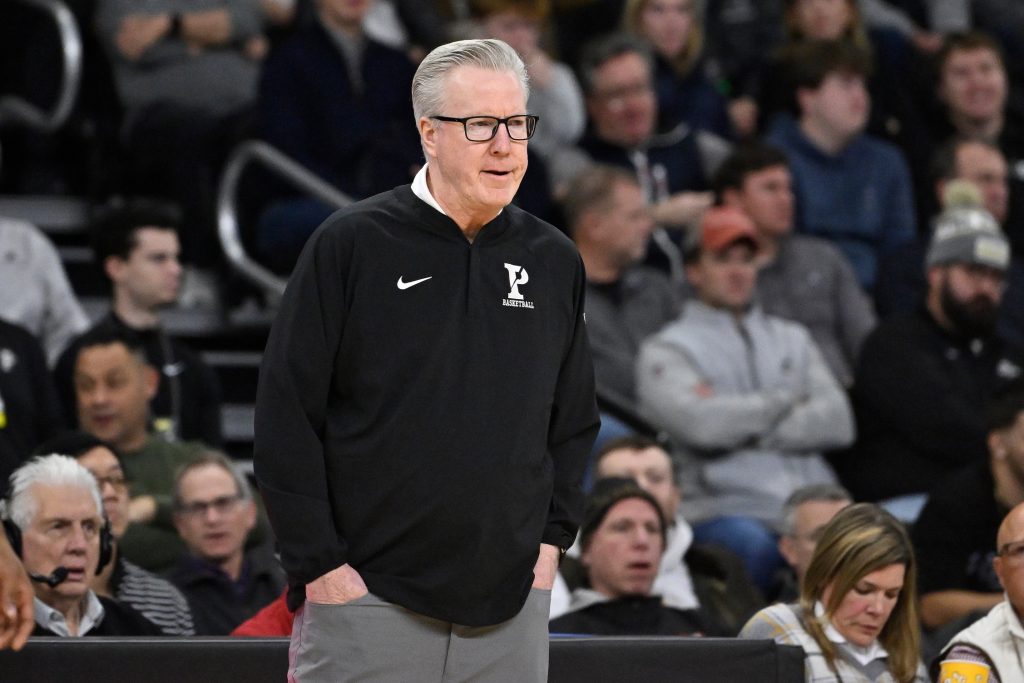
It’ll be the Penn Quakers vs. Villanova Wildcats for the Big 5 championship on Saturday night at Xfinity Mobile Arena.
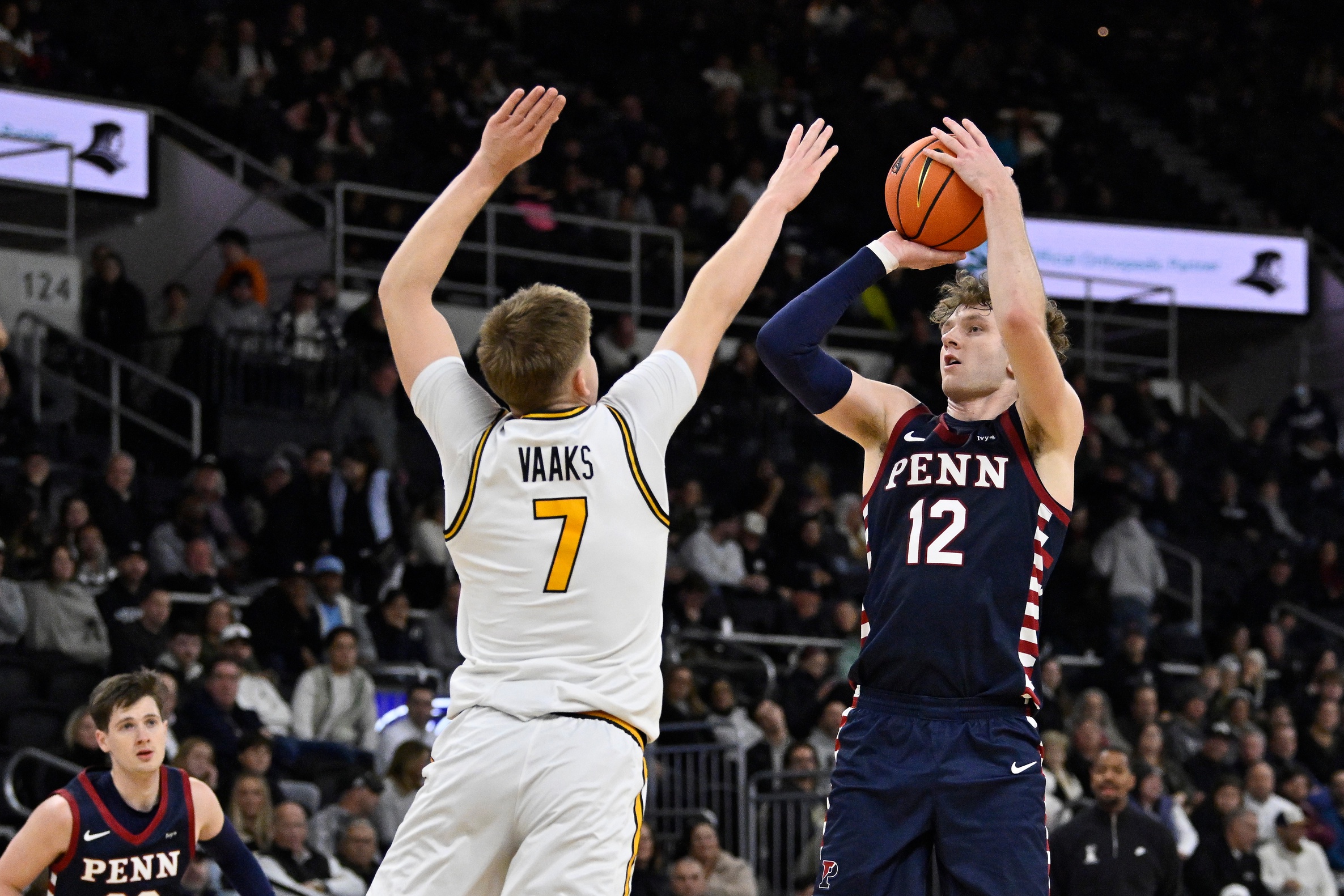
A surprise matchup, perhaps, after Penn took out St. Joe’s a few weeks back with a combined 54-point effort from senior Ethan Roberts and first-year, former five-star recruit TJ Power. Villanova, meantime, thumped Temple and La Salle by double digits in pod play to make the title game for the first time since the still-new format was introduced back in 2023.
There are new coaches on both sides, with Kevin Willard helming the Cats and native son Fran McCaffery taking over for his alma mater. McCaffery played point guard at the Palestra back in the 1980s and came home this year to replace Steve Donahue after more than 40 years coaching at Lehigh, Notre Dame, UNC Greensboro, Siena, and Iowa.
We caught up with McCaffery ahead of Saturday’s title game to talk all things college hoops, from the current state of Big 5 and NIL to student attendance and bringing back some juice for Philadelphia basketball.
Crossing Broad: What do you make of the matchup with Villanova, and what does it mean for your program to be in this game in your first year back?
Fran McCaffery: I’m really proud of our guys. I thought we beat two good teams in St. Joe’s and Drexel, two well-coached teams. Playing in the championship game is an accomplishment. I’ve got tremendous respect for Kevin (Willard) and have been coaching against him since 2005 or 2006, right around there when he got to Iona. One of the best coaches out there. He’s doing a great job with the program in the short period of time he’s been there. They’re playing together, some new faces, and he did the same thing at Maryland, put some new faces together and got them playing winning basketball. That’s the key in today’s climate. But the opportunity to play at Xfinity Mobile Arena against a team of that caliber is a great opportunity for our program. Our guys have earned it and we’re looking forward to it.
CB: This is still a relatively-new thing. It’s the third year of the triple-header and obviously your first back in Philadelphia. What do you make of the format?
McCaffery: I think it’s great. I would prefer the old format. We got away from that, where everybody plays everybody. I understand the dynamics of scheduling now, and how it affects so many things. But the fact that we are playing each other, and then getting all six of us in one location is a great thing, and I’m excited about it.
CB: We talked to Jay Wright when this started a few years ago and he mentioned how hard it is. You have different TV contracts and the six teams in different conferences. He mentioned playing Temple on a random day in February, then UConn was next on the schedule. In this current world, is it even possible to go back to the old Big 5 setup?
McCaffery: You might play Temple, then you might play UConn, but you have to play somebody before you play UConn. I don’t think that’s that big of a deal. But the earlier point is a good one. Are you playing 18 league games or are you playing 20 league games? That’s factor #1. You’re in a MTE (multi-team event/tournament) at some point, typically around Thanksgiving. Do you have challenge games, like Big East/Big 10, or ACC/SEC? That limits how many games you have left. The concern, of course, is how do you get to the correct number of wins and prepare your team for conference play? The Big 5 games are going to be competitive. They’re going to have a different level of intensity. I think it’s important right now that we play them when we play them in terms of what time of the year it is, because it does get a little harder when you get to conference play – and I think Jay’s point was not so much playing Temple then UConn, but once we shift into conference mode, we’re thinking conference play. How do we beat UConn, how do we beat Marquette, Butler, St. John’s, etc? Bottom line, it can be done, the question is does everybody want to do it? And we should.
CB: The coaches seemed unanimous coming out of the pandemic that they wanted to do this differently, that something needed to change. Fran Dunphy said we absolutely needed to make the Big 5 better. How can we get it back to what it used to be? And one of the thoughts was to have a showcase, to give the Big 5 its day, where all of the teams are there and the group is front and center, something to ‘own’ every year perhaps. If we can’t do it the old way, then let’s make it this recurring showcase event. Do you agree with their assessment that it wasn’t clicking and a format change had to come?
McCaffery: I think there’s no question that’s exactly what happened. And Dunph is right. He’s usually right. He’s got a great perspective across the board in college basketball, but certainly in Philadelphia. Nobody would have a better one. It is a showcase. We’re all there on the same day, all of the teams and fans, and we all have an opportunity to play competitive games. I like the idea. I think it was a really good one under the circumstances that you pointed out. If it’s not going to be like it used to be, then what can we do that makes sense? I think this is a great idea.
CB: Your perspective from afar – you were in Iowa for 15 years, Siena and elsewhere before that. Coming home, what do you make of the arenas, the fans, the juice for the games – what’s the current state of the Big 5 in 2025?
McCaffery: I can’t speak to the other programs other than we did play at Drexel and had a nice atmosphere there. The St. Joe’s game was (home) and we had a good crowd. I think college basketball in general, attendance has fallen off. Interesting thing about that is that interest itself hasn’t fallen off. Every game is on TV. You can find it somewhere. But there’s not as many people going. It doesn’t seem to have the same interest from student bodies, and that’s everywhere. There are some places where it’s still nuts, I came from a league where that was the case at Michigan State, at Purdue, obviously there’s Duke and Carolina, Kentucky (in other conferences). But student engagement is getting more and more difficult across the board. It’s noticeable. Attendance has dropped. The days of getting 20,000 people to a college basketball game seemingly are over. Anybody that builds a new arena is building them (for eight or nine thousand), maybe 10. You want that kind of atmosphere. It’s one of the things that always made Cameron (at Duke) special. Nine-thousand people. You cannot possibly get a ticket, and that’s the way they want it and the way they’ve kept it and that’s something special. For us, when you think about the days of the Big 5, it was always full. Always full because there were four teams. And it should be full. You should be able to get 8,700 people with four teams. It’s a little harder there. But our fan base has been consistently good. I’d like to get the students a little more engaged. When I played here a long time ago, we had Krzyzewski-Ville, before he was even a coach at Duke. We had students sleeping outside for tickets.
CB: Those were some of my formative moments at WVU. We’d boo the ever-living shit out of the Pitt Panthers whether we had 4 wins or 14 wins –
McCaffery: You know, my junior year, we played there (in Morgantown) in the NIT. And when I was a Notre Dame assistant we were in the Big East with West Virginia. Always a tough place to play. The Mountaineer would run out there and shoot his gun and everyone would go nuts. It was well-known for being a difficult road environment. That’s what we all want to see (here), no question.
CB: These things can be cyclical in nature. Winning cures all. Fans leave and come back. I think the thing that’s interesting about the Big 5 is this concept of tribalism. If you’re a Villanova guy you don’t care about Temple, and if you’re a Temple guy you don’t care about Penn. (Kyle Pagan) is a Temple guy and will rip Villanova incessantly, the Main Line crowd and wine and cheese and all of that, but likewise, he doesn’t care if Drexel goes on a 10-game win streak. So I think it’s hard with 6 teams, if you went to one of those schools, the other 5 are rivals, and you’re not cheering for them if they go to the Sweet 16 or Elite 8. And casuals typically only get on board with a Jameer Nelson and Delonte West type of run, or 10 years ago when Tyrone Garland hit the Southwest Philly Floater. Do you agree with this thought that the spread out fandom is a negative thing for the Big 5?
McCaffery: For many years, people were Big 5 fans. They came to the Palestra and rooted against teams that were not from Philadelphia. No question that’s changed. You are a fan of whatever school you went to, or whichever team you might pick. There are probably some fans left that are still Big 5 fans, but it’s a difficult niche when you look at Philadelphia. It’s a pro sports town in so many ways. The sports fan has a lot of options. It was so much easier when all the teams played at one location, oftentimes on the same night. It’s a natural transformation with what has happened in professional sports, and how it relates to college sports in particular in this city.
CB: As I look at Lane Kiffin going 11-1 and leaving Ole’ Miss for LSU before the playoff, your thoughts in general on this current NIL and transfer portal world we’re living in? You’ve got brand new teams seemingly every year, guys transferring in and out, money flying around. How does that affect Penn? Are you vulnerable to this?
McCaffery: I think everybody’s vulnerable. Because the NCAA made a decision that every athlete is a free agent and can have an agent. It stands to reason what transpired. That could also impact what we talked about earlier, the interest from fan bases, keeping track of the players if your team’s roster changes every year. You’re gonna lose fans. The system isn’t working, but to those people who say “NIL is a bad thing,” NIL is not a bad thing. NIL is something that should happen. The Supreme Court voted 9-0 in favor of it so it’s not going anywhere. But it’s the additional guardrails that were supposed to be in place, that went away. It was supposed to be fixed with the revenue share. But it has not. As long as you can still pay above rev share, then there is no salary cap. But until contracts are binding and both ways, school and athlete bound – and we’re gonna have to go with longer contracts. If we have one-year contracts it’s like European basketball. You play this year for next year, and your agent is shopping you. It’s not something I think people enjoy seeing when they watch a game, and the color commentator is saying, “well he was here, then he was there, now he’s here, he’s on his third school.” I don’t think people like that. But the reality is that’s legal. Until there are more rules in place that people actually follow, it’s gonna be just like it is now, where everybody can just do whatever they want at any particular time, and you really can’t get mad at the players or the coaches.
CB: It’s been like the Wild West. Hard to keep track of teams and players with a lack of continuity. But I feel like there’s at least momentum to bring those guardrails up. Do you feel that sentiment among coaches and the public?
McCaffery: I don’t think there’s any question about that. On the basketball side, I have the utmost respect for (NCAA SVP of Basketball) Danny Gavitt. He is really smart, he is actively working on trying to solve the problems we have just discussed. He knows what they are. There are a number of difficulties at arriving in where we all want to be, nor can we seemingly have some level of agreement of where we need to end up. Everybody says the same thing – “we need guardrails, we need rules,” but then nobody wants to follow them. So ultimately I think there will be more rules. I’m hopeful that they’re followed to the level they should be. It can’t be there’s a rule, then we appeal, we sue the NCAA, the NCAA has 28 billion dollars worth of lawsuits against them, they can’t possibly fight every lawsuit, and nobody ever sides with the NCAA no matter what case they present. That’s not right. I was on the ethics coalition for six years and know those folks and have been around them, I’ve been in meetings with the top people in the NCAA. They want what’s best for the student-athletes. They want to do the right thing. But all anybody ever does is attack them and blame them. You can’t govern unless people want governance. We’ve gotten away from it. Hopefully we’ll get back to it.
CB: Last one, and I ask this on behalf of my Temple employee. Hawkeyes vs. Owls, 2016 NCAA Tournament, first round. He says your guy pushed off before the game-winning basket. Would you like to respond to him?
McCaffery: All I know is it was a good bucket. Three of the best officials in the country didn’t call it. I think he’d better let it go. Bucket was good. We won the game. The guy who (scored), Adam Woodbury, is among my favorite players I’ve ever coached. Just an absolute gamer. I was happy for him.
Tickets start at $38 for Saturday’s Big 5 Classic triple-header. Penn and Nova tip off at 7:30 p.m.

Kevin has been writing about Philadelphia sports since 2009. He spent seven years in the CBS 3 sports department and started with the Union during the team's 2010 inaugural season. He went to the academic powerhouses of Boyertown High School and West Virginia University. email - k.kinkead@sportradar.com