
Ad Disclosure
What’s New With Pennsylvania Online Casino Regulation In 2026

By Drew Ellis
Published:
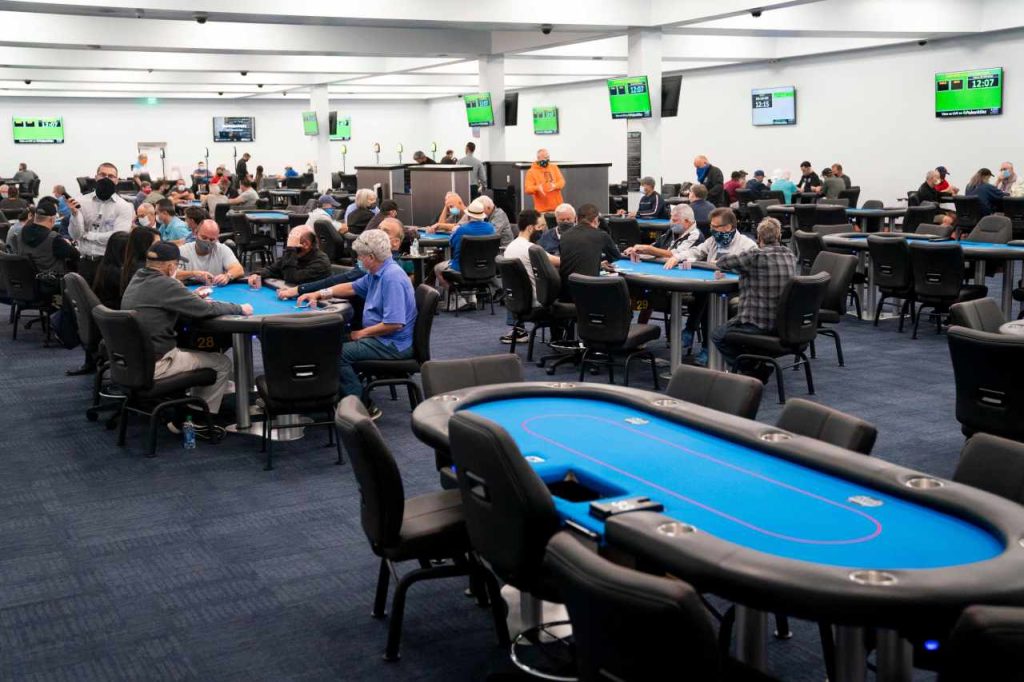
Pennsylvania is the biggest online casino market in the United States.
It brings in more revenue from iGaming than any other of the seven total legalized online casino states in the US.
Any news that comes from the Keystone State in regard to online gambling or regulation is worth paying attention to.
While not much developed in 2025 to alter the 2026 PA online casino landscape, there were still some focal points to consider in 2026.
Pennsylvania Online Casino Revenue Keeps Soaring
Following a strong Q4 for PA online casino operators, the state finished with $3.46 billion in gross iGaming revenue for 2025.
That was up 27.7% compared to the $2.71 billion the state did in 2024.
Pennsylvania closed out the year with three consecutive months of over $300 million in monthly revenue. Prior to that, PA had never surpassed that $300 million milestone.
December saw the state produce a total of $324.3 million, a new monthly record by nearly $12 million compared to October’s $312.5 million.
The record year of revenue ultimately produced $1.24 billion in tax revenue for the state.
Commercial casino revenue in 2025 was $3.36 billion, a slight 0.8% dip compared to $3.38 billion in 2024. While iGaming detractors will point toward a decline for commercial casinos, that minimal dip doesn’t compare to the expansive growth in tax revenue for online casinos.
Pennsylvania Joins MSIGA for Enhanced Poker
One big milestone in 2025 saw Pennsylvania become a member of the Multi-State Internet Gaming Agreement (MSIGA).
Pennsylvania joined MSIGA in April, opening the door for peer-to-peer online poker play with online gamblers in other states that are part of the MSIGA. That includes Delaware, Nevada, New Jersey, Michigan, and West Virginia.
This agreement has allowed for online poker events to produce larger amounts of players and greater payouts by pooling competitors from multiple states.
Pennsylvania is the largest state to join the group in terms of population and potential online poker players.
“This is a commonsense step to support hundreds of thousands of Pennsylvanians, grow our economy, and bring in more revenue to support our schools, our seniors, our small businesses, and more,” Gov. Josh Shaprio said in a press release at the time. “Three of our neighbors are already part of this agreement – and with this action today, we’re making sure Pennsylvania remains competitive in a rapidly growing online market.”
Since May, Pennsylvania online poker revenue is averaging $2.482 million per month in revenue. That is up slightly compared to recent years. Fiscal Year 2024/25 averaged $2.424 million per month, while FY 2023/24 averaged $2.412 million.
Monopoly Casino Enters PA iGaming Scene
Pennsylvania did see a new online casino operator join the expansive market when Monopoly Casino launched in July.
Monopoly was able to secure a license through Bally’s to become the 24th online casino in Pennsylvania.
You will find all the usual options at Monopoly Casino. The operator has hundreds of different online slots, along with dozens of table games and live dealer choices.
Monopoly is also one of the available New Jersey online casinos.
Skill Games Still Unregulated In PA
Skill games have been a hot-button issue in Pennsylvania, but they remain without regulation and still present a challenge to legal, regulated gambling in the state.
The controversial gaming format wasn’t included in the state budget for regulation entering 2026. However, the topic is likely to be revisited again during the year.
The skill games market operates in a legal gray area in Pennsylvania, with legislators and lawmakers uncertain on how to best handle regulation. Gov. Josh Shapiro proposed a lofty 52% tax on the games’ revenue, however other lawmakers proposed a lower rate of 35%.
Current commercial casinos faces a 55% tax on slot machines and electronic gaming devices, while table games have just a 16% tax rate.
Current iGaming revenue is taxed similarly with online slots taxed at 54%, and table games taxed at 16%.
Drew Ellis has experience covering the gambling industries in North America and around the world. Decades of media experience provide him with the background to handle the complexities of different gambling laws and policies around the United States and North America. Ellis has primarily focused on online and retail casino news since 2021. Prior to working in the gambling industry, Ellis spent over 20 years in the newspaper industry, covering sports and the gambling. His work for The Mt. Pleasant Morning Sun and The Oakland Press was recognized with awards by the Associated Press and other media organizations. Drew has also contributed to the Detroit Free Press and the Associated Press.