
Ad Disclosure
That Tyrese Maxey Late-Game Pick and Roll Must Be a Nightmare to Defend

Published:
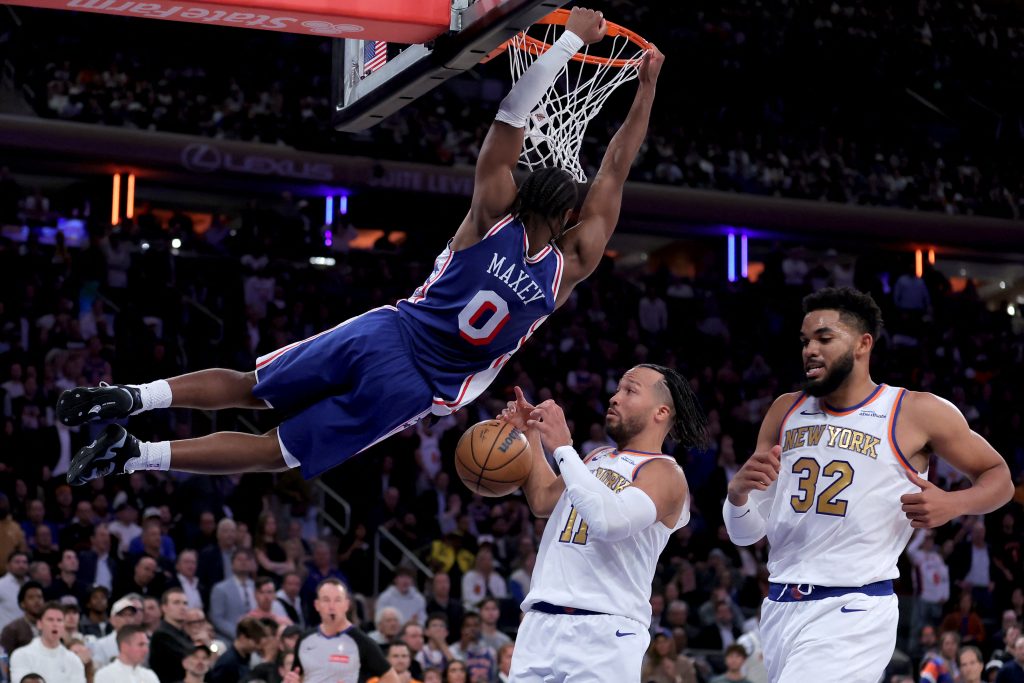
The Sixers are 4-1 this season with wins against the defending champion Knicks, Cavs, Bucks, and Pacers. They lead the league in clutch points and have the second best 4th quarter point differential and second best 4th quarter defensive rating.
They’re playing their best basketball late, which has been enough to make up for some poor quarters, like we saw against Indy.
Fittingly, it’s Tyrese Maxey in the closer role through five games, and that’s on a team with Joel Embiid, Jaylen Brown, and LeBron James. The Sixers have been spamming this high pick and roll with Maxey as the ball handler, and it led to the Wednesday night dagger:
The Pacers switch, taking Andrew Nembhard off of Maxey and giving him Aaron Nesmith. Maxey goes iso, Nesmith steps on his left foot trying to keep up, and Maxey drains the open three.
Most teams are closing with pick and roll in the modern NBA, and it’s really simple how the Sixers set this up. They put one guy in each corner, then a third guy in the dunker spot. They’ll pick a screener based on the matchup they like, depending on whether or not the opponent is switching. But it looks like this more often than not:
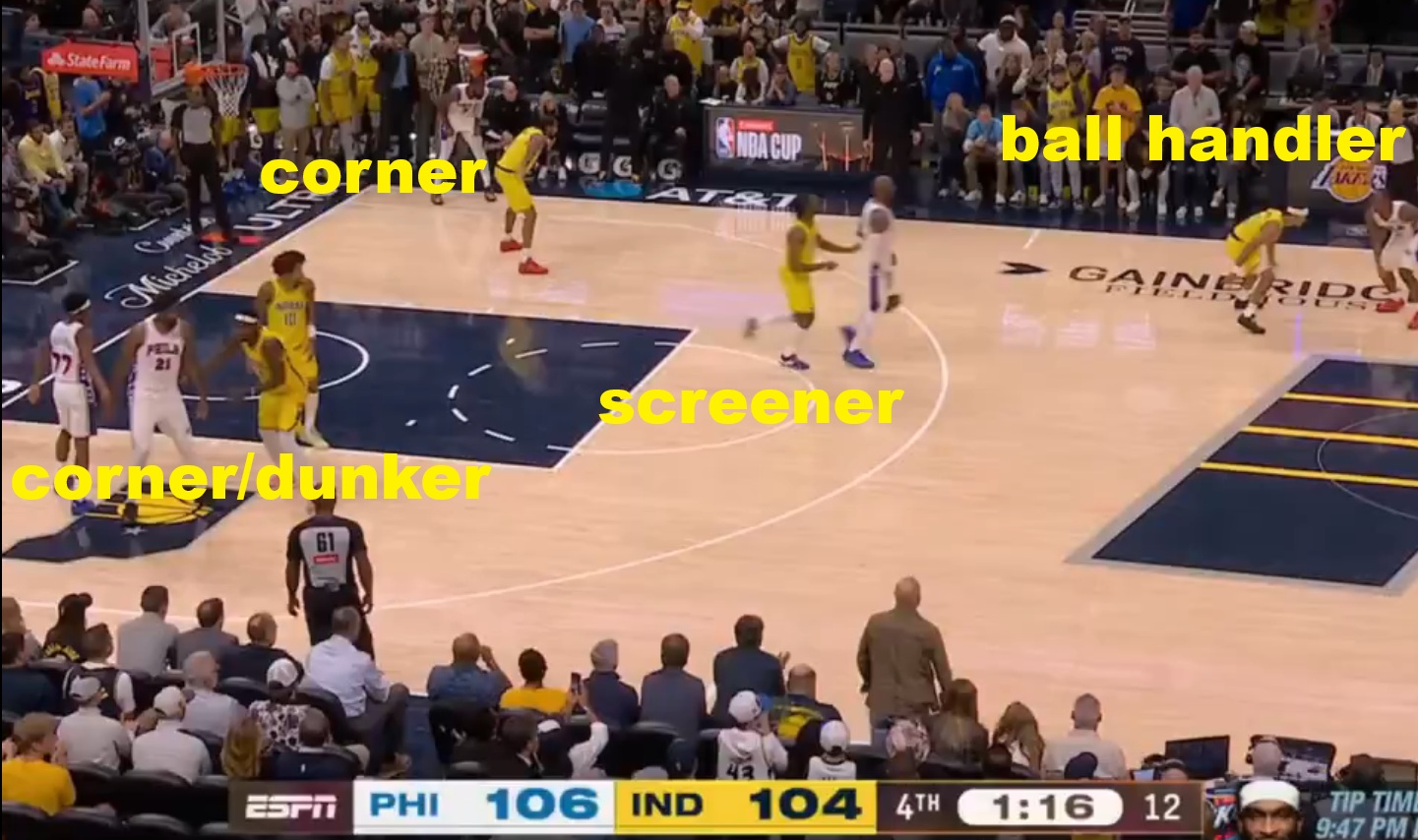
LeBron comes up to screen. Jaylen Brown is in the ballside corner and Joel Embiid and V.J. Edgecombe are on the other side. After the Pacers switch, everybody spaces out and gives Maxey room to work.
The thing that makes this so hard to defend is that you also have to account for Maxey’s speed. There have already been a bunch of possessions this year in which the opponent plays high and defends the action reasonably well. Then Maxey will simply turn the corner and torch his defender, like the late play from the Cleveland win:
That’s so difficult for Cleveland because Jarrett Allen is pulled all the way out of the paint with Embiid screening. So the Cavs don’t have much rim protection. If the wing comes off to help, Maxey has a kick out to Edgecombe for a wide-open three. If he doesn’t, like in the clip above, Maxey has an open floater.
There was a similar situation from earlier in this game, in which Sam Merrill goes over a LeBron screen. Maxey waves off Brown, doesn’t like what he sees, and so LeBron flips the screen. Merrill gets torched on a straight-line drive while Mario Hezonja is glued to James:
That’s so nasty. If you go under the screen, Maxey is probably pulling up from three. If you go over, you risk giving up the lane to one of NBA’s fastest players. When you freeze this particular sequence, it looks like Merrill is in a position to slide, but by this point Maxey is already gone:
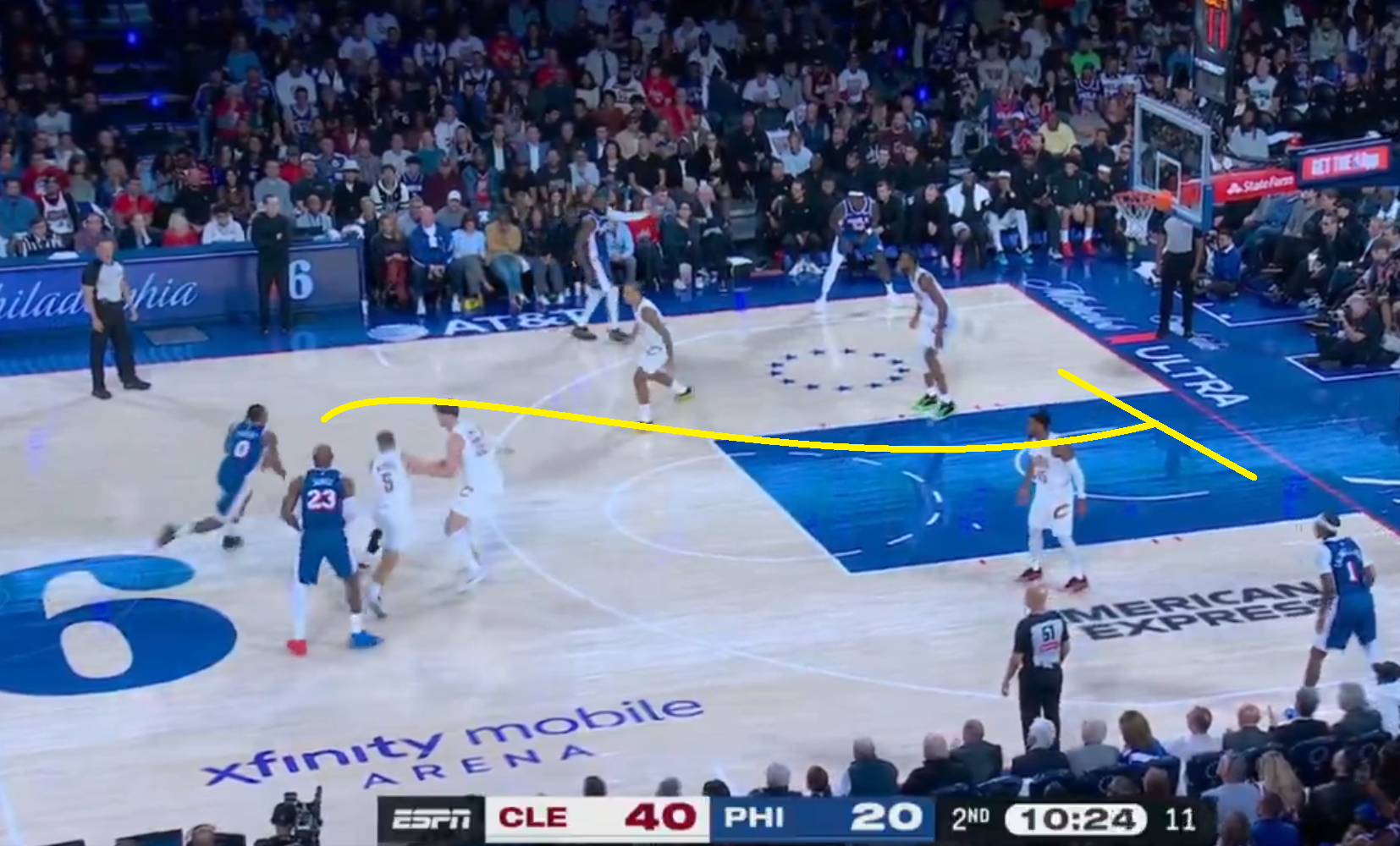
And if you trap or blitz, even hedge and retreat, then Maxey is swinging it to LeBron or Embiid and you’re playing 3v4 while trying to recover. You saw that a handful of times in the season opener, when the Knicks successfully blitzed Tyrese, who dumped it off to Embiid instead. Twice, Embiid dribbled to the nail and paused before picking out Edgecombe in the dunker spot. One play resulted in a bucket and the other put V.J. on the foul line.
There’s nothing complicated about what the Sixers are doing, they just execute it really well. And the other four starters seem deferential to Maxey, which is great, because you can’t have five closers. Sure, there will be nights when Maxey is off, and maybe Brown is on a heater, so you play through him instead. Or Embiid is cooking and playing against a smaller lineup or a bullying a lesser big. So you can adjust from there, but this Maxey PNR is the perfect template to start from, and they’ve been nailing it so far.
Kevin has been writing about Philadelphia sports since 2009. He spent seven years in the CBS 3 sports department and started with the Union during the team's 2010 inaugural season. He went to the academic powerhouses of Boyertown High School and West Virginia University. email - k.kinkead@sportradar.com