
Ad Disclosure
Q/A: Susan Barnett on Life After Television, Living the Costco Dream, and How a Passion for Design Became a Real Estate Career

Published:

It was 13 years ago when Susan Barnett walked away from CBS 3 Eyewitness News, unexpectedly.
Back then, the Eagles had recently fired Andy Reid, the Phillies traded Vance Worley for Ben Revere, and the Sixers were close to bringing in Brett Brown to kick off the Process era. Mike Knuble was a Flyer for the second time and the Union didn’t even have practice fields.
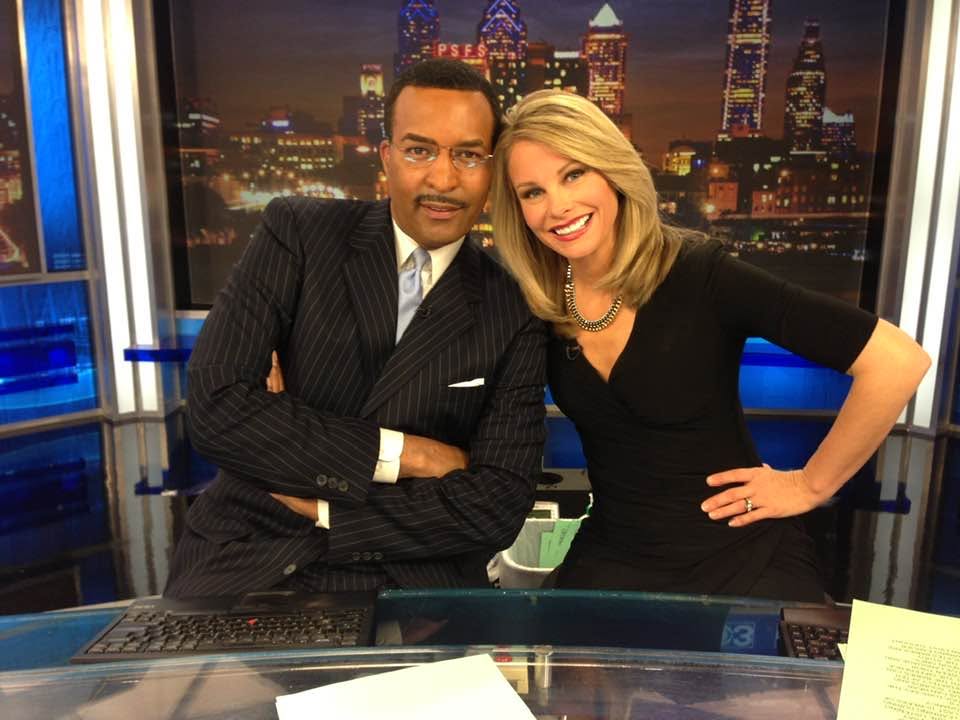
So it’s been a while for the Levittown native and University of Delaware alum, who came back to the region in 2005 after prior TV stops in Miami, Pittsburgh, Champaign, and Clarksburg. She was anchoring the 5 p.m., 6 p.m., and 11 p.m. news alongside Chris May when she decided to call it quits on a television career that began in the 1990s in small-town West Virginia with a $12,000 salary.
Now?
She has irons in several fires, tapping into the “creative energy” that was initially stashed more than a decade ago. Barnett’s a lacrosse mom with two teenagers, a college-aged son, and a burgeoning real estate career, no longer saddled with the rigorous schedule demands of a major market television anchor.
I caught up with my former KYW colleague to see what’s going on, and talk a little bit about the news business in 2026.
Crossing Broad: It’s been 13 years. Bring us up to speed.
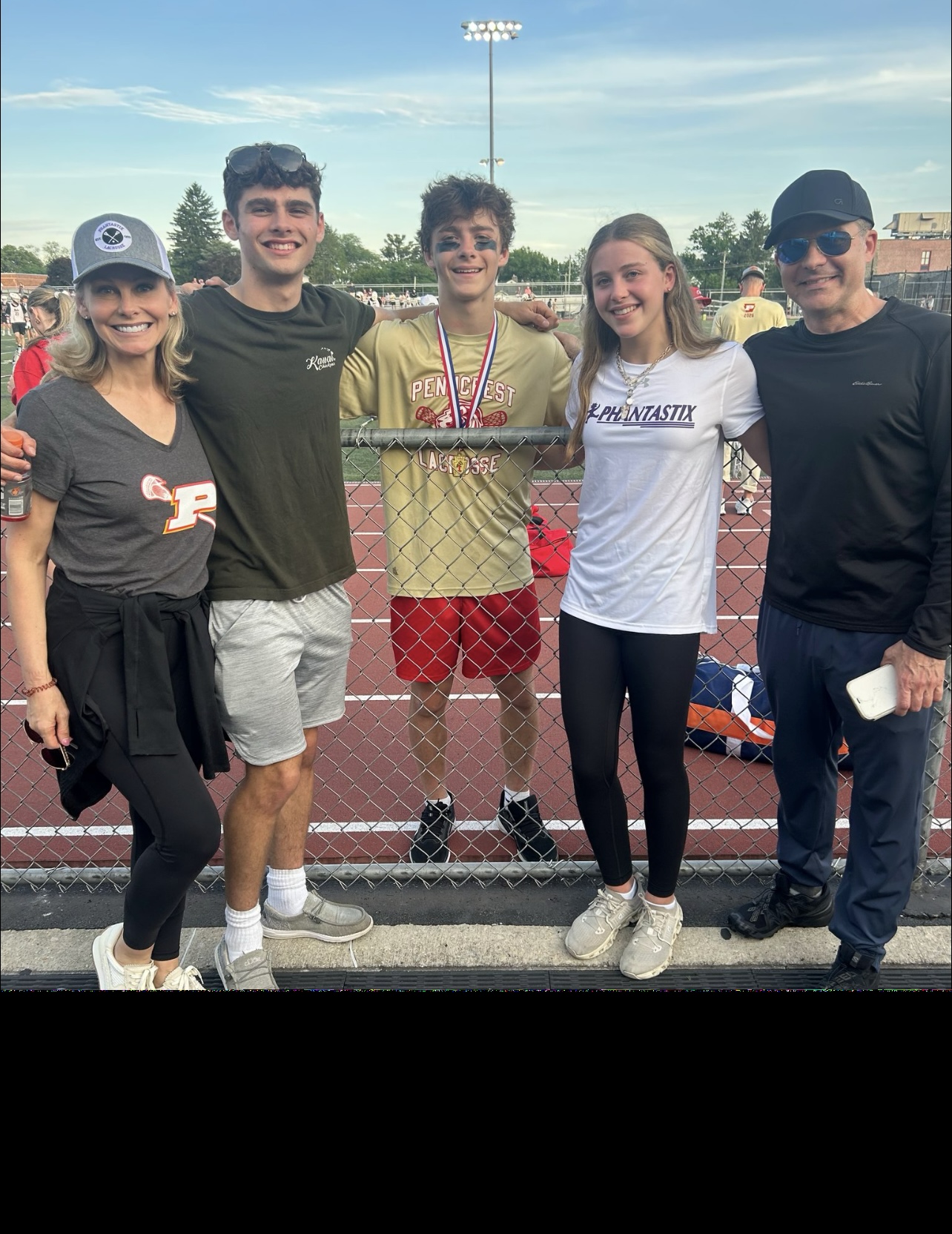
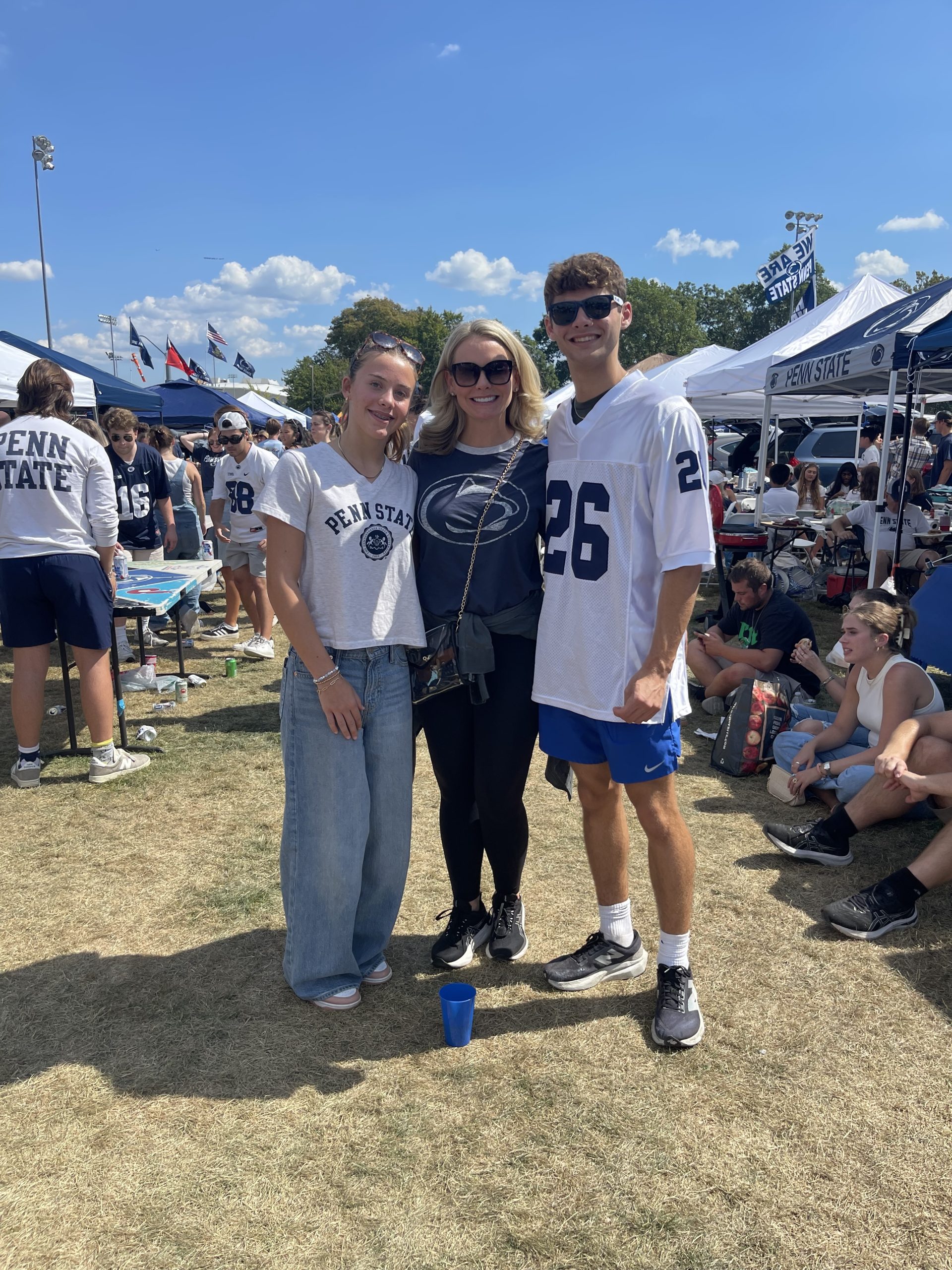
Susan Barnett: Hard to believe it’s been 13 years. Kind of crazy, actually. Life has been full speed ahead. I have three kids and that was the primary reason why I left TV news. My youngest was going into full-day first grade, so I was working evening shift and I wouldn’t see him Monday through Friday. He would be at school all week, I would be at work all night. We wouldn’t connect. I had an opportunity to make that tough decision to step away, and I did, and now that first grader is a sophomore at Penn State. It’s gone like a blink of an eye. My other two, who, when I stepped away, my youngest was 18 months and my middle was 14 months older than her. Now they’re both in high school. My daughter, Cruise, is a 9th grader and my son, Steele, is in 10th grade and we have Blase at Penn State. That’s kept me super busy.
In the meantime, I was like, “Gosh, I can’t really just not work.” I needed to do something for me and use the skills that I had. So over that time I found my way first into QVC, which happens to be close to my house. Commuting into the city all those years was a real trek, but QVC was right in West Chester. I’m in Newtown Square. I started representing skincare brands and now I’m on my second brand as an ambassador, so I educate, I do QVC airings, go on and talk about the products as the expert. I educate consumers and viewers on those products. Then I also do social media for Algenist, the skincare company I’m working for now. I do videos for them.
And then after doing that for a while, I always had this passion for real estate, so I thought, why not? The kids were in school full day, so I went to school myself. I went to real estate school and here I am, two years in. I’m creating my real estate brand, which is Luxury Living with Susan Barnett, and leaning heavily into the marketing piece of that.
It’s been fun. I’m 53 years old and I’ll be 54 in October. I have to keep moving forward, have to keep learning and growing and doing all of the things. That’s where I am.
CB: Are you one of those people who gets itchy when they’re not doing anything? In those first couple of years after television, were you enjoying it? Or was it always in your mind that you would stay active?
Barnett: You know what? I thoroughly enjoyed it, to be honest, when I first stepped away. I loved my freedom. It was just… freedom. It felt so good. But I found myself at Costco all the time (laughs). I would be at Costco, and that was living the dream for me at the moment. Because it was so different than what I was used to. I was just enjoying being a homemaker and making my own schedule.
But eventually, yeah, when you’re in news and TV it’s a visual medium. It was sort of like a creative energy that I needed to expel. I found my way back to TV with QVC and that just made sense. After a while you start to get antsy.
CB: It’s funny how jarring it can be, like a complete 180. I remember when Chris May left Channel 3, he immediately grew this huge, bushy beard.
Barnett: Right? You do all of the things you couldn’t do. Actually, one of the things I did right away was I went out and got Lasik surgery. Because I couldn’t (do the recovery while working in television). You had to wear goggles for a while, and I just didn’t have time to do it. But yeah, I went out and got Lasik right away and it was great. And then I could see. And I was thinking, “Gosh, if only I could see the teleprompter now, it could have been so much better.“
CB: You said you had a passion for real estate. What was interesting about it?
Barnett: It started to become what could have been a really expensive hobby. I love interior decorating and it’s something I really enjoy in my own house. I’ve always had a good eye and natural talent for that and really enjoy making our house a home every step of the way. But then my husband and I purchased a property here and there and I loved doing full-on renovations. I was really good at space, like taking a beach condo, for instance, and switching it from a two-bedroom to a three-bedroom. What was a walk-in closet, I made it into this really cool bunk room. This was many years ago, but still, today it’s awesome. Literally every square inch, I’m efficient with that. These were always properties we could enjoy as well and would improve them, but at some point I was like, “well, we don’t have unlimited resources,” so maybe I should get into real estate and help other people do these things.
CB: You got into real estate. Cydney Long (ex-CBS/NBC) is in real estate. John Bolaris does it. There are a couple of other people still in the TV business doing realty as a side hustle. Is there something about the news business that lends itself to real estate?
Barnett: I was thinking about that. Recently, yes, because it’s funny, real estate agents have to have a strong social media presence. In real estate, when you hire someone to represent you, that person is very intimately tied to you for a period of time. They are seeing financials. They’re in your home. They’re helping you clean out your closets. It has to be someone you know, like, and trust. By getting out there and doing videos and speaking to people that way, it helps for when potential clients are ready to buy or sell a home. I guess in that regard it could be a natural thing for a television person to get into real estate. But at the end of the day I think a lot of people leave TV and get into PR, they go into teaching…
CB: ….corporate communications…
Barnett: Yeah.
CB: Most TV anchors started as reporters. They were out in the field and they were journalists and storytellers. The process of buying a home is a story in itself. You’re thinking about what you want, what you need, maybe envisioning your kids running around in the backyard, or picturing how a certain room is going to look with certain pieces of furniture. Maybe I’m talking out my ass here, but it feels like there are some parallels that can be drawn.
Barnett: Totally. You actually hit the nail on the head. For me, I’m loving and really leaning into the marketing piece. The storytelling piece. For me, coming from a journalism background, when we prepare a house to sell and then we put it out there to the public, my job, and what I love doing, is helping other people envision what it’s going to be like living there. We get the house staged, then I’m walking through the home, I talk about the home, it’s almost like I’m living in the home, and I think that helps people picture themselves living there. That’s an angle or piece of the storytelling expertise that I think translates well (from television).
The other part of that, you know that as a reporter every day is different. Every story is different. You have to become an expert in that particular subject matter, every single day. It’s new and different, and that’s kind of how every real estate deal is. They’re new and different and you have to be able to absorb a lot of information to break it down and make it understandable and make sure the deal goes smoothly.
CB: You mentioned this earlier, but I wouldn’t mind you elaborating on it. It’s rough having young kids and working in TV. You were coming in for those shifts around 3 p.m. and sometimes you wouldn’t get done until midnight. So not only do you miss dinner with your family every night, but you don’t have a Friday night either.
Barnett: Right, yeah. It’s a full-time job. Most people work full-time jobs. But the shift work nature adds a different element, especially when you have kids that go to bed at 8 or 9 at night.
The other thing is the unpredictability. You know that at any given time (things can happen). Especially as the main anchor, you’re the quarterback, so your phone is ringing at 8 in the morning, 10 in the morning – “Come in, we have breaking news.” The day that would typically start at 2:30 p.m. easily could start at 10 a.m. or keep you there until 2 a.m. And there is so much community involvement, which is one of the best parts of the job, and that includes events that happen on the weekends. So yeah, it’s just a lot. The schedule is great until it just is not anymore.
If I could have continued (at Eyewitness News) at a three-quarter level, not even part-time, but maybe three quarters of it and have (time with) my family, I would have done it. I just couldn’t continue at that pace at that time.
CB: Is there anything you miss about TV?
Barnett: Yeah, for sure. The camaraderie. Everyone says it, but the people you work with in the newsroom, the laughs on the anchor desk, and, in the field, just having a front row to some of the most unbelievable moments. Real life is better than fiction at every turn. The first time I really missed the job was when the Pope came to Philadelphia. I was like, “Oh man, I wanna be there.“
CB: That was Pat Ciarrochi’s send-off, the Pope visit. She’s a pious woman. That was like the Super Bowl for her.
Barnett: Yeah that’s right, I remember she said, “Wheels up.” She and Jim Donovan covered that beautifully, but I would have loved to have been witness to that.
CB: I would say in television the ceiling is high and the floor is low. You get to cover some very cool things. It’s certainly not boring. But for me, I’d get that phone call you mentioned. It’s 10 at night and it’s, “Hey they got Osama Bin Laden, we need you to come in at midnight and work until 9 a.m.” And I’d think, okay, I guess this is what I signed up for. But it doesn’t make it any easier. I don’t think anybody can do that forever. There aren’t a lot of Jim Gardners out there.
Barnett: Right, yeah. And you do see the Steph Stahls and Pat Ciarrocchis who have (done it for a long time). You give them credit. But so many of us tapped out at some point. Time to go in a different direction.
CB: A lot has changed in TV and the media world. You have the 11 p.m. news and we’re showing people stories they saw two hours ago on their phones. Influencers are everywhere. Social media. If someone told me they were interested in getting into television now, I’m not sure what I would tell them. What do you think?
Barnett: It’s funny; I remember having this exact conversation with my agent before I came to Philadelphia, because back then we saw it coming. That was 2005, I think. We could see this evolution of the internet blowing up news, and changing so rapidly. Now, all these years later, to your point, everything is either immediate, or it’s old news. People have access to all of these things before we go on the air to tell them about it. It’s different and it’s challenging.
Here’s the thing: what has come into play more, for better or worse, maybe better in sports but worse in news, it’s that analysis. Now people are tuning in and it’s like, “Yeah, I know this event happened, but what are they saying about it on CNN? What are they saying about it on FOX News?” You’re getting all of this opinion and that’s really changed the integrity of news. But I think it’s where broadcasters can find a lane now.
CB: I don’t know if you feel the same away, but when you work in a huge TV market like Philadelphia, which was #4 at the time, you could fill up an entire show with fires and car accidents and shootings and stabbings. You could listen to the police scanner and stack a show that way. But I always felt like we did the best news in smaller markets because you had to try harder. You had to go look for news and enterprise and find things instead of letting it come to you.
Barnett: Totally. It’s so easy to go out and just get great visuals, and you need that on TV, especially in a city like Philly, to have great visuals. But I think back to my time – and I know you have West Virginia roots, too – but my time as an anchor and reporter in Clarksburg, West Virginia. I would drag my tripod and my camera up the steps of city hall every week. There wasn’t something big and something sexy happening in my face. The police scanners were quiet. So I’d have to go to City Hall and sit through a meeting and try to find an issue that was happening and make something out of that.
CB: I’ve been lucky enough to be invited to some of the local colleges. I tell the kids that there’s no more gatekeeping in media. Back in the day, someone had to hire you and you would use their platform. Now anybody can build their own platform if they have a strong enough brand. Everybody with a phone is a journalist. So the walls have come down, which is good, but the downside is that it becomes saturated with everybody trying to play ball at the same time. I don’t know if you see what I see.
Barnett: When you have a degree in communications or journalism, you learn a lot of valuable lessons and rules about being an ethical journalist. So many things just to make sure you get the story right. Trying not to convict anyone in the court of public opinion, for instance. All of these things. When you don’t have any of that training, it becomes the Wild West. I think that’s unavoidable in this day and age. You’re going to have that. But I think as a consumer of news, which I am now, and I guess always have been, you have to be really careful where you’re getting your news. You have to cite multiple sources. Things that pop up on your feed, that all has to be taken with a grain of salt. Who knows? These people aren’t trained. And even with AI now, you don’t even know if what you’re seeing is 100% accurate. It’s a little scary. Now, more than ever, you have to cite multiple sources, cross-reference your news. I love the BBC and NPR, and then I’ll watch the cable networks when we’re talking about national stories. But I still think local news does a greadiret job, some of the best journalism.
CB: I guess the fundamentals never really change. The essence of the business is someone going to a location, interviewing someone else or recording video, collecting that information, and then disseminating that information. But yeah, the technology has really opened the door and changed the landscape.
Barnett: Isn’t it funny, the quality? We were in a newsroom where it was about the quality, white balance (for video), no jump cuts, all of those things that made something look really good on TV. Now you’re on an iPhone, there’s jump cuts everywhere, the color is off. And it’s completely acceptable to the rest of the population and they could care less. That’s really hard!
CB: Funny also to think how much time was spent on small things. Should the mic flags be triangular or square? What should the desk look like? What color wrap dresses are the anchors supposed to be wearing?
Barnett: Your kids are still little, but I have kids with phones. They have access to social media and things come through their feed. And my daughter will come up to me and say “Mom, did you hear X, Y, Z happening?” And I’ll look at her and say, “What’s your source? Where did you see that? That sounds fishy. Let’s investigate.” I’m teaching them, but they don’t have, at 14 years old, experience to know. Just because it looks and sounds convincing… Oh god, that’s another story entirely… but the loudest voice in the room isn’t always the right voice in the room (laughing).
CB: Last one then – where can people find you these days?
Barnett: Facebook and Instagram is where I am most. I started a YouTube channel that I’m still building. But I’m really working on my Luxury Living with Susan Barnett brand. That’s the real estate arm of what I’m doing. I’m telling people’s stories, marketing their homes, helping them get top dollar for their homes. And I’m working to connect with builders and market their projects as well.
Kevin has been writing about Philadelphia sports since 2009. He spent seven years in the CBS 3 sports department and started with the Union during the team's 2010 inaugural season. He went to the academic powerhouses of Boyertown High School and West Virginia University. email - k.kinkead@sportradar.com