
Ad Disclosure
Q/A: Nick Sakiewicz on the “Disappointing” Demise of the Philadelphia Wings, the 2026 World Cup, and the Union’s Next Reinvention

Published:
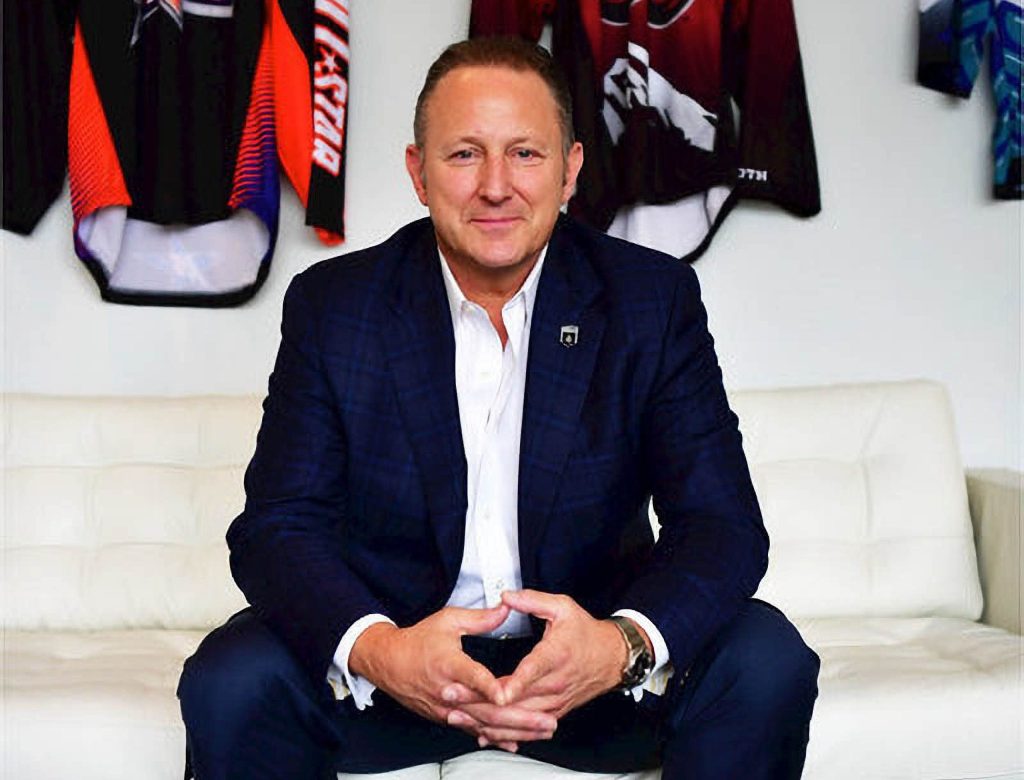
Nick Sakiewicz will be the first to tell you that retirement didn’t work out for him.
It didn’t last very long at all.
“I was not good at playing golf three times a week and hanging out,” laughed the former National Lacrosse League Commissioner and Philadelphia Union CEO and Operating Partner, who tried calling it quits in 2025, unsuccessfully.
We recently caught up with Sakiewicz, who is largely responsible for bringing to Philadelphia both the Union and Wings, the latter of which is no longer operating as of a few weeks ago. Comcast-Spectacor announced in late March that it had decided to get out of the box lacrosse game, writing in a statement that the NLL “no longer aligns with our strategic direction.”
Sakiewicz was running the league in 2017 when expansion brought the Wings back to Philadelphia, and called the decision to move on “really disappointing.”
“That was a great effort bringing that team back, and they did really well,” he said. “As you know, the Wings are a real legendary brand in the Philadelphia sports scene, and I was disappointed (to hear this news). It’s too bad. I don’t know what their reasoning was, but I helped bring the Wings back to life there and they were doing well when I was commissioner, except for the COVID years.”
Spectacor hasn’t given a specific reason for this permanent Wings cessation, though a lot has changed since expansion. Sakiewicz mentioned the pandemic, for starters. The Flyers are exiting their rebuild and getting a brand-new stadium in 2030, shared with the 76ers and an expansion WNBA team. That’s part of a larger effort to develop the sports complex alongside the Phillies and possibly the Eagles, spearheaded by Dan Hilferty, who was not with Spectacor at the time of the Wings’ expansion deal. That was during the tenure of Dave Scott, who retired in 2023.
“I only know Dan from my time at the Union, when he was CEO of Blue Cross/Blue Shield,” Sakiewicz explained. “Obviously he’s a smart guy and a very good businessman, so I don’t know what the discussions were like when he took over. But they must have their reasons. I thought the Wings were such a perfect fit for the whole Philadelphia ethos and lifestyle. It’s a gritty sport inside a hockey arena. I thought it was just such a great fit. And when Dave was there, we put that deal together. Shawn Tilger (former Flyers EVP and COO) was running ticket sales, and they were one of the best-performing teams in the league, ticket sales-wise at the time. They were kind of a flagship for me at the time to go out and line up a bunch of other NHL teams who were super interested. That league really needed more NHL teams because the business model, tucking a lacrosse team into the NHL operation was very successful. All of our NHL teams made money back when I was commissioner. We were using that to convince other expansion markets to tie in to a lacrosse team. All of those teams made money and some even made more EBITDA than their hockey operation, believe it or not, just because they were really efficiently run live events in an arena. The Wings were a flagship, Vancouver was a flagship, Toronto was a flagship – although they weren’t owned by the Maple Leafs, but they had a very similar mentality. Buffalo – the Sabres ownership owned the Bandits. They were the best financially performing team. So it was a really good model and I was trying to get the league to expand more. My goal was to get the league into 30 markets, maybe more, to grow the sport and grow the footprint. The Wings were my poster child. Wings, Vancouver, Toronto, Buffalo, Halifax Thunderbirds – they were our flagship teams. Some of these teams were selling out their arenas.”
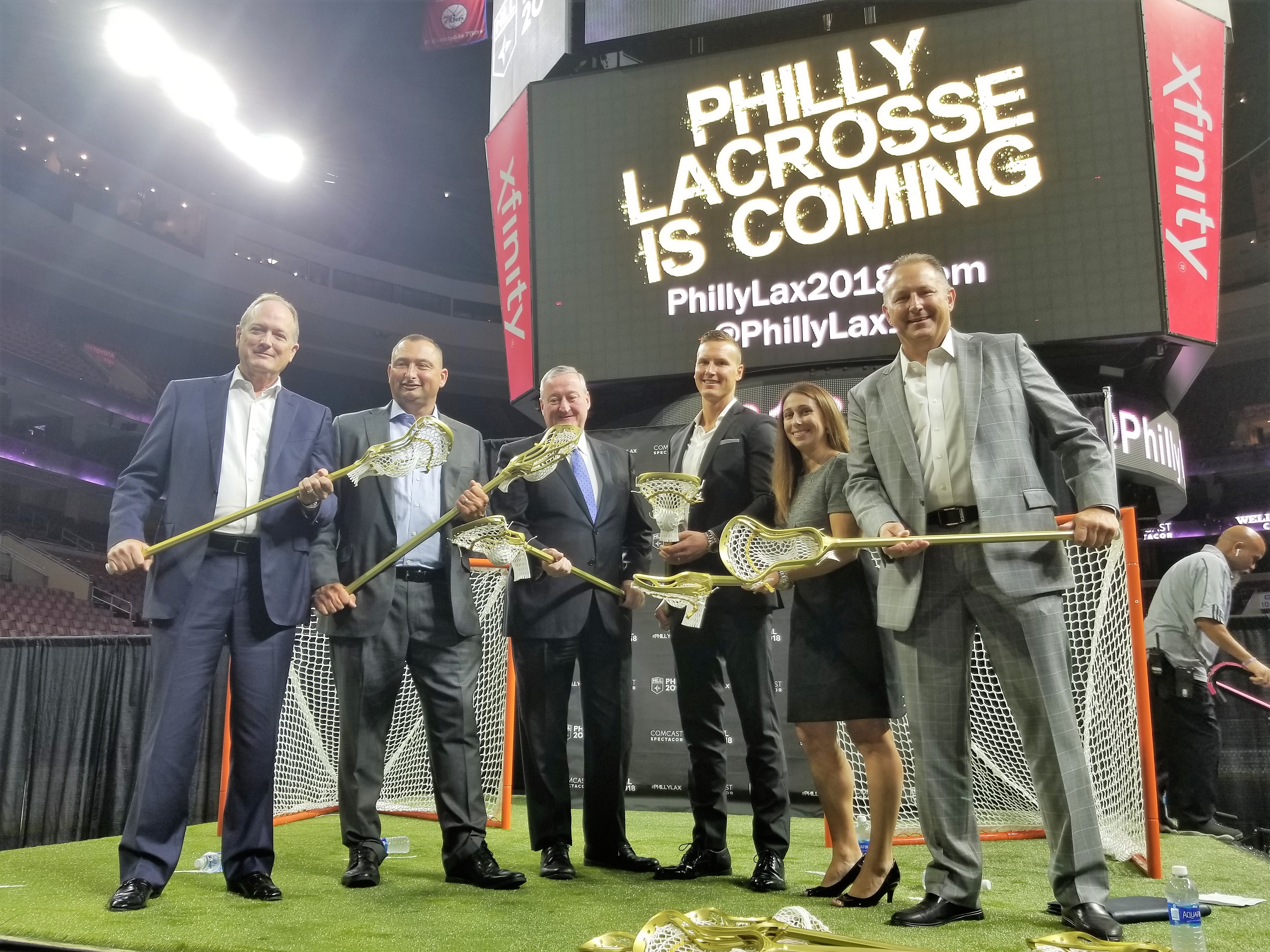
There’s no official word yet on what will happen with the Wings, who could relocate under new ownership, or fold entirely.
Here’s the rest of our conversation, which touches on the long-awaited 2026 World Cup, the current state of the Philadelphia Union, and Nick’s laundry list of post-COVID ventures:
CB: Catch us up on what’s happened these last few years. You left the NLL in 2022, then you had a stint with the Arizona Coyotes and Hartford Athletic in the USL. What were those experiences like and what brought you there in the first place?
Sakiewicz: I had two contracts at the NLL (totaling) six years. Two of those were COVID years, which was horrible. Worst two years in my career. It’s not that I had had enough of the NLL, but it was something I no longer wanted to do, so I formed my own company, actually two companies. One is Global Football Group with Rene Meulensteen, the former Manchester United manager, which is a consulting company that consulted clubs on player ID, development, and transfer. Then the other is NES Sports and Real Estate Development. My first client was the Coyotes and I went there on a hybrid contract, so I was consulting their president on stadium development, because they were trying to get a stadium built. I was also the Chief Business Officer with the Coyotes and loved my time in the NHL. What a great sport, great league. Gary (Bettman) and Bill (Daly) do such a great job leading that league. The player mentality, getting to know the players and learn about that mentality and I wish some other sports had athletes with that mentality. They lose teeth and keep playing. Pretty amazing. But yeah, I really enjoyed my time in Arizona, but we couldn’t get the arena done. Some partners of mine in real estate, we bought 200 acres of land a short distance from where the Coyotes owner wanted to build the stadium, and I tried to convince him to get this land, the 200 acres, versus the 47 acres he wanted to build his arena on. And I just knew it wasn’t going to happen because it went to a referendum and it had all sorts of complications. So my partner and I are developing that land.
And then I took a consulting agreement with Hartford. They were not a well-performing team both on the field and off. They hadn’t made the playoffs ever in their history. I cleaned house, changed the whole front office, brought in Brendan Burke, who I hired as the first head coach of Bethlehem Steel. He’s had an amazing career, so I brought Brendan in and they started winning and we started making money and doing really well. Then I tried to acquire Hartford. I made an offer to the owner twice, he rejected it and wanted more money. So I ended up moving on. Because what I wanted to do was buy that team and build an academy, much the way we did in Philly with Richie Graham over at YSC. That was a one-year consulting gig in Hartford. I left there and then did a lot of consulting with Rene. Rene was coaching the Australian national team (as an assistant), then he qualified Iraq to the World Cup (also as an assistant), so he’ll be coming over (to North America) this summer. Then we did a lot of different projects for different clubs, again mostly in the player identification, development, and transfer spaces.
Then, last year, I tried to retire, and that didn’t happen, because I’m not the retirement type. So, through the consulting company, we made an investment, my wife, my partners, and I, in a very large chunk of real estate in Miami, just south of the airport, and part of the company is ownership in Miami FC, the USL team here, which is incredibly struggling. We’re gonna build a stadium and academy for a variety of sports including soccer, football, basketball, tennis, swimming, golf, in Homestead. It’s a 300-acre piece of property, and we’ll also build an entertainment district there. Sports Performance Hub, I’m a co-founder of that company and running it now, living in St. Pete and Miami and living the dream again, staying active.
We’ve got some great partners and athletes, some NBA players, two top-10 ATP tennis players, and doing a deal with the world governing body of swimming. We just signed a golf deal with a big time teacher. In soccer, we’ll build the stadium and move Miami FC into that stadium, and we’ll do women’s soccer, a multitude of different sports, entertainment, concerts, music, rodeo. Rodeo is big in Homestead. So yeah, it’s another big project. I’ll keep staying vertical and doing the business (laughing). I can’t retire.
CB: I don’t know if you remember this, but I have very vivid memories. It was 2010, first year of the Union, I wanna say December, and the entire front office was out at Tir Na Nog in Center City. They were announcing where the 2018 and 2022 World Cups would be –
Sakiewicz: Oh yeah, I remember that day. Absolutely. I was on the committee to bring the World Cup over here and it was horrible.
CB: It was like the air was sucked out of the room entirely.
Sakiewicz: I was standing next to (then-Philadelphia Mayor) Michael Nutter and we were like… ‘fuuuuck, damn’ (laughs). It wasn’t good. We put a lot of energy into that bid. And we didn’t know back then why we didn’t get 2018 or 2022 because all of that was going on behind the scenes. Have you read the book Red Card (How the U.S. Blew the Whistle on the World’s Biggest Sports Scandal)?
CB: It’s on the list.
Sakiewicz: Yeah, you should read it. All of those shenanigans were going on behind the scenes. And if we had known it back then, we probably would have been even more pissed off.
CB: I think we had an inkling back then, but nobody knew the full extent of what was going on. (note: the 2018 and 2022 World Cup bids, which went to Russia and Qatar were fraught with allegations of corruption and bribery)
Sakiewicz: Yeah, well it took the FBI to figure it out. And what came out was shocking. If you watch the documentary though, (MLS executive) Kevin Payne is in it, Sunil (Gulati, former USSF President), a lot of people that we knew over the years were kind of front and center. Not saying they were involved, but what a mess. So we know why we didn’t get 2018 and 2022. But it’s amazing (how far the sport has come here). It really is unbelievable what’s transpired since we started the league (MLS) in a small LA office in 1995. Soccer over 30 years, I know what happened now, an entire generation of American kids that I played in front of in the 80s, they grew up, and they had kids, and when you couple that with the rich expat (culture) from Europe and South America and other parts of the world, you now have a very vibrant soccer market. They buy jerseys and tickets and go to games, watch on TV, and there’s a real market that grew over 30 years and it’s really satisfying. I got a tour of Inter Miami’s new stadium two weeks ago. I think it’s the nicest new stadium. There are new MLS stadiums in Columbus, Cincinnati, Austin, Nashville, and they’re a different level than what we built in Chester. This one in Miami that Jorge Mas built is off the charts. It’s spectacular in every way. It’s the nicest one in my opinion, to date. I’m just standing there at midfield thinking, ‘Jeez man, when it was eight of us in LA trying to launch this league, I would have never imagined that this would be in front of me 30 years later.‘ It’s really unbelievable.
CB: I think about that a lot. Even with the Union, for example, back in 2010, if a six-year-old kid went to the game and got a Sebastien Le Toux shirt, that kid just turned 21. I guess if soccer got its moment here at the 1994 World Cup, then 2026 shows that we now have an established culture and identity over several decades of domestic support.
Sakiewicz: It’s gonna be massive. I think now I can say this looking back, but the sport is only at halftime if you think about it. There’s a whole new generation coming through and demanding better quality on the field. They know the game. They know the international game. My youngest son is 27 now, but he and his buddies knew all of the starting lineups for Barcelona this past weekend, and Man City. They know the teams and the names of their stadiums. If this first half was 30 years, the next is gonna be 15 or 20 and it’s gonna look even more robust. The quality of play will get better. Hopefully we’ll be generating more American talent. We’re a little bit behind there still. A lot of work to do there even if the American player has gotten better over 30 years. We need more of them. The academies, all of the clubs are now investing in academies and coaching development and player development and that’s what we’re doing here in Miami. We’re building a world class soccer academy in addition to the other sports I mentioned. But the focus is on player ID, transfer, and development, which is unique to soccer.
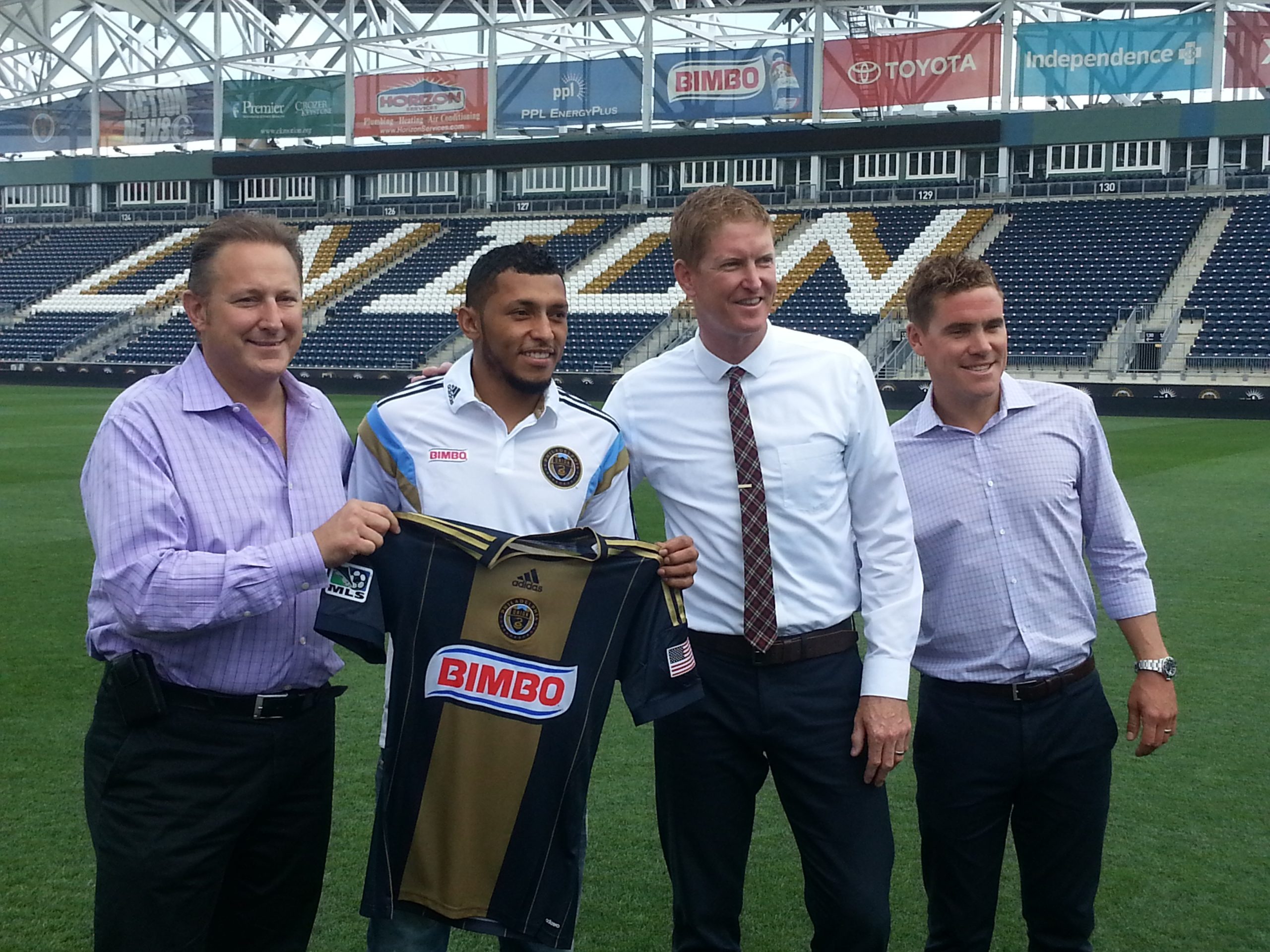
CB: Since we last spoke, the Union won a couple of Supporters’ Shields. The academy is churning out some talented players. They have an identity as a German Red Bull / Moneyball develop-and-sell type of team. Fans will probably always be frustrated that they’ll never go out and spend $10 million on that game-changing Designated Player, but I think we know what this team is now.
Sakiewicz: That was the vision, to create an academy, which we did, and to really build from within and develop from grassroots. But you also have the commercial side to pay attention to. People will ask what my trophies are, and they’re walking around on two legs. Jim Curtin was one of those. I’m so proud of that guy and what he did. He retired (from playing) and said he wanted to stay in soccer, so I made him the coach of the Under-17 team and the rest he did on his own. I hired him to coach the first team after John Hackworth, so it was great to see that success and watch it. I went to the final in LA (MLS Cup 2022) because I wanted to support him and some of the staff that was still at the club. That was disappointing (the loss), but it was so ironic that John (McCarthy) was Man of the Match that day. I was sitting there like ‘holy shit… can you even make this story up?’
CB: The same John McCarthy who was in there for penalty kicks during the 2015 U.S. Open Cup final at PPL Park.
Sakiewicz: Exactly! (laughs) I watched LAFC’s starting goalkeeper go down and I’m like, ‘No, this can’t be…‘
CB: Yeah, watching that unfold in real time, I’m thinking… ‘There’s no way this is how the story ends.’
Sakiewicz: And he was Man of the Match! When (the goalkeeper sub happened), I was like, ‘Okay, the Union are going to win this.‘ Unfortunately it didn’t happen, though you’re very proud of people like Jim Curtin. But yeah, I think the Union, that stadium is too small for the league. It needs to go to another level. I built it to expand to 30,000 so maybe they’ll figure that out. You always have to keep reinventing yourself in sports. And I don’t believe in that David Beckham and Lionel Messi model anymore. Maybe it was good in the early years of the league, because you gain some visibility. Being involved in the Beckham deal with AEG, it was good then, but I believe in the academy development now and the Union is getting that right. They just need to develop more and better players. The goal was always to do that and win through that method, and I think they’ve done a good job populating the roster with academy players; they just need to generate more good players that can help them win.
CB: It’s always been a fascinating thing, looking at the best academies in the world. But you’ve got to be a team like Ajax or Benfica to put 11 homegrowns out on the field. The example I always use is 1999 Manchester United, which had Beckham and Paul Scholes, Ryan Giggs, Nicky Butt and the Neville brothers, but they also went out and bought guys like Denis Irwin. So I think Union fans and media are at this point where they’ve got the academy part down, okay. Now you just need to supplement with a DP here or there and that’s the formula to really put this thing over the top.
Sakiewicz: That’s the formula. And those are two great examples. Ajax and Benfica are machines when it comes to developing talent, but they never win Champions League. They won’t go out and buy a Ronaldo or a Messi or Mbappe, and that’s the next reinvention if you’re looking at the Union. Or maybe the next stage, maybe not reinvention, because they got the academy piece right. But the next level now is peppering in some international level talent. Not future level international talent, because they’re already developing those (domestically), some are gonna play in the World Cup this summer and that’s great to see.
CB: Last one for you – if and when you ever do retire, what does it look like? What would it have to take for you to say, ‘Okay, I’m good?’
Sakiewicz: I’m good now. That’s the decision I made about a year and a half ago with my wife. I live in paradise, got a granddaughter, got two kids married to women that we adore and love. My wife and I are living our best life, so I’m good now. I would have to go horizontal and in the ground (laughs). My wife was right; I was not good at playing golf three times a week and hanging out. Even traveling. We did a big exit in Arizona over two months and went everywhere – China, Tokyo, Middle East, Portugal, Spain, Italy, spent part of our kids’ inheritance and when we got back it was August and we were sitting around the house in St. Pete (Florida) and she’s like, ‘What are you gonna do?‘ And I said, ‘What do you mean? I’m gonna play golf this weekend.‘ Then she says, ‘You gotta get something going.’ So I ran into these guys at the Buccaneers training facility in November, and the rest is history. We reinvested some money into Homestead. But I’m good. If it all stopped today, I’ve done eight real estate projects, built two soccer stadiums, was on the design and sales teams for two other stadiums that Phil Anschutz built, was involved in LA Live, London O2 Dome, Berlin Arena, the launch of Major League Soccer. There’s not a whole lot that I’m chasing anymore.
Kevin has been writing about Philadelphia sports since 2009. He spent seven years in the CBS 3 sports department and started with the Union during the team's 2010 inaugural season. He went to the academic powerhouses of Boyertown High School and West Virginia University. email - k.kinkead@sportradar.com