
Ad Disclosure
A Look Back at Daryl Morey’s Sixers Tenure, and What His Firing Means for the Franchise Moving Forward

By Sean Barnard
Published:
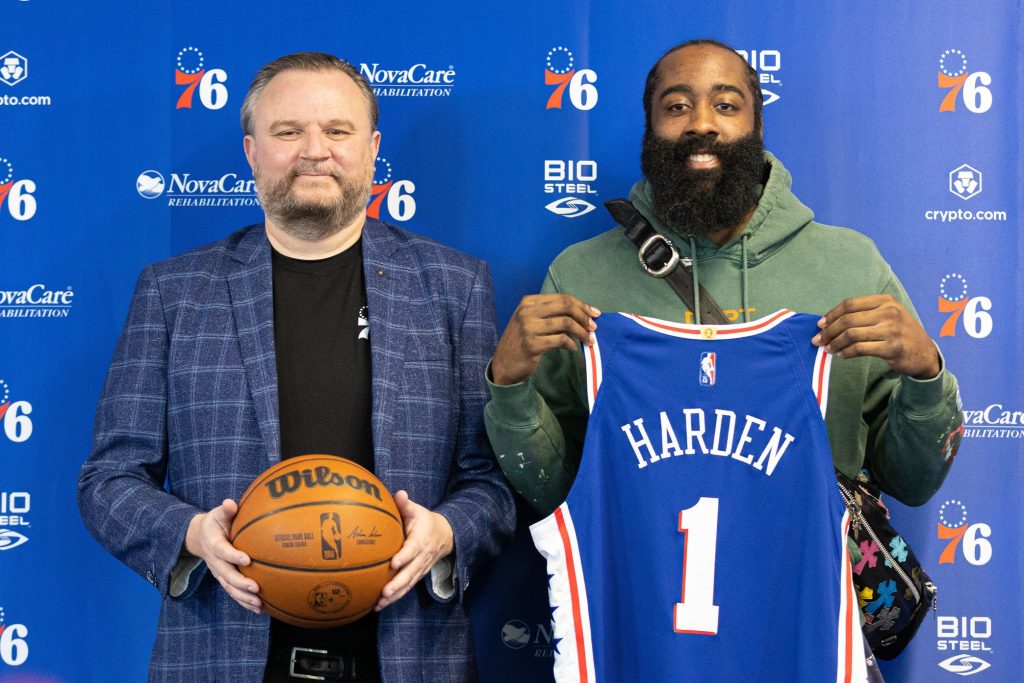
The first step of the Philadelphia 76ers’ offseason is complete after Daryl Morey’s firing.
Morey will hold a complicated legacy both in the NBA as a whole and in Philadelphia. Looking just through a Sixers lens, Morey largely inherited a mess and leaves a different flavor of mess behind. There’s also a blurred line between how much responsibility truly falls on Morey’s shoulders across his tenure. Sure, he is the guy who ultimately calls the shots. But it’s not Morey who has a say in whether or not the team will pay the luxury tax. You can make a fair case that Morey did as well as he possibly could, given the resources he was forced to operate with and the flaws of players he inherited. It was not Morey who selected Joel Embiid as the franchise face. Nor was it Morey who signed Tobias Harris to the contract that seemingly dragged on for 15 years.
However, he is also not blameless in the team’s underperformance by any means. There are plenty of mistakes that were made across his tenure that he has to accept the brunt of. Ultimately, it is a results-based world that we live in. The expectation was that Morey could be the guy who builds a roster that takes this team over the championship hump. This goal was not reached, and this is the way the NBA works.
Daryl Morey’s Sixers Tenure
To take a step back, Morey was officially hired by the 76ers on November 2nd, 2020. This was immediately following a first-round sweep by the Boston Celtics in the 2019-20 season, a COVID bubble exit that comes with an asterisk. The starting five of Joel Embiid, Ben Simmons, Tobias Harris, Al Horford, and Josh Richardson did not prove good enough, especially with Furkan Korkmaz, Mike Scott, and Shake Milton being the primary bodies off the bench.
The first notable move that Morey made was trading Horford. He was send to the Oklahoma City Thunder along with the 34th overall pick in the upcoming draft in exchange for Danny Green, Terrance Ferguson, Vasilije Micic, and a top-20 protected first-round pick in the 2025 NBA Draft. This draft pick changed hands in a few different trades, but the protections ultimately proved noteworthy as it ended up turning into the 21st overall pick thanks to some miracle shotmaking from forever Sixers legend Mike Muscala:
Without diving down the rabbit hole of how different the Sixers’ outlook would be if one of these shots had bounced off the rim and Maxey was wearing a different uniform, this was a necessary step back the Sixers had to take. The Horford signing always felt more motivated by taking him away from the Celtics than adding him to the Sixers. The archetype of a player that can be a big man when Embiid is off the court and play next to him for stretches made sense, but Horford was a square peg in a round hole for this role.
The infrastructure to make the Maxey pick was in place before Morey got there, but he still has to get credit for being the lead decision-maker. Drafting Maxey with the 21st overall pick was truly a franchise-changing decision that the Sixers will still reap the future benefits from. He is everything an organization can ask for in a player from a personality, work ethic, and talent standpoint, and there has been a clear organizational shift to push the two-time All-Star as the face of the franchise in recent years.
Morey inherited Doc Rivers as the Sixers’ head coach in a similar way to how whoever is hired as the next GM/President of Basketball Operations will with Nick Nurse. Generally, it is essential for the coach and GM to be in lock step, and they prefer to make the hire themself. It is the responsibility of the front office to bring in as much talent as possible, and the job of the coach is to maximize the talent of the roster at hand. But there has to be alignment between the two in how the rosters are built. You only get 15 standard roster spots, and getting the skillsets that a coach can and wants to prioritize is important. With Rivers running the show, Morey had some shield. Rivers refused to play young players, as highlighted by Furkan Korkmaz clocking more playoff minutes than Maxey in his rookie year.
The first pivotal point that Morey faced came after his first full year at the helm, after the Sixers melted down against the Atlanta Hawks, with the infamous Ben Simmons passed-up dunk opportunity being the longest standing memory of this season. There was plenty of friction between Simmons and Joel Embiid before Morey took control, and the breaking point of their era together. This outlook was not helped when Rivers was asked, following the loss, if Simmons could be the point guard of a championship team, and the head coach poetically replied, “I don’t know the answer to that.”
The saga hit its full year gear when the team returned to training camp the following season. Simmons dug his heels in, saying he wanted to be traded and willingly held out from the team. When he did finally show face in the building, he was purely a distraction and thrown out of practice by Rivers.
Morey deserves immense credit for his handling of this situation. The vast majority of NBA decision-makers would have blinked at this and cut their losses for a deal worth pennies on the dollar. Morey was open and expressive that he was willing to call Simmons’ bluff until an offer of fair value came across his desk, going as far as to state they would wait out the entirety of the contract if no fair trade was offered.
Ultimately, Simmons was traded for James Harden, who reunited with the man who built him up to be the star he blossomed into. Say what you want about Harden, but it is inarguable that the former MVP gave the Sixers more of a postseason chance than the options that felt realistic at the time. The Sixers still never made it past the second round, but there can be a pretty legitimate argument made that the Harden-led iterations of the Sixers were their best postseason opportunities. The Game 7 loss to the Celtics in the 2022-23 season knocked off the 2018-19 loss to Kawhi Leonard and the Raptors as their most legitimate chance of winning it all. Harden helped take Embiid’s game to greater heights, and Morey pulled his weight in completing the roster around the duo. The Simmons situation was one that could have slammed shut any sort of championship aspirations, and Morey was at least able to navigate it to allow the team a few more cracks at contending.
But the Harden era ended in a similarly disastrous fashion, which is one that Morey deserves more blame for. There typically are three sides to every story. In this case, it is Morey’s side, Harden’s side, and the truth. While what specific conversations were had behind the scenes largely dictate who has the moral high-ground. But the entire situation boiled down to Harden’s belief that Morey made a contractual promise that he did not follow through on. It also made for what will forever be one of the funnier soundbites in sports, as Harden publicly stated his disdain for the Sixers’ President of Basketball Operations to a group of Chinese children at an Adidas camp:
When push came to shove, Harden exercised his player option to guarantee himself $35.6 million, while making it clear he had no intention of playing for the Sixers. Before the issue became as problematic as the Simmons situation, Harden was traded to the Clippers in exchange for Nico Batum, Marcus Morris, Robert Covington, KJ Martin, and future draft picks that the Sixers will still reap the benefits of.
This also broke up the Sixers’ salary cap sheet to where it was not as top-heavy and star-dependent. The Sixers put more responsibility on Maxey’s plate as he continued to develop, and leaned on the role players at a higher rate. This was the season that ended with the Sixers beating the Heat in the play-in tournament, largely driven by a stellar shooting performance from Nico Batum, and then falling to the Knicks in six games in the opening round of the playoffs.
Most of the money went off the books from the trade return, and this presented the chance for the Sixers to add another max contract player in free agency. Paul George was the only real option that fit the desired description, and the Sixers inked him to a four-year max deal. It is easy to view this through a negative lens, knowing what we know now. But the reality is, this was a really difficult needle that Morey was able to thread. It is rare in the modern NBA that players of George’s caliber even reach the free agent market, even if you could make the case that this should have been viewed more as a red flag than a positive.
Embiid’s injury issues hit their low point the following season, and everything that could go wrong did go wrong. The Sixers limped to the finish line with a 24-58 record, and Morey’s seat felt hot. The saving grace of the season was the decision to fully throw in the towel, with their previously traded first-round pick being top-six protected as a driving force of this decision. Philadelphia entered the lottery with a 63.9% chance of keeping the draft pick, and ultimately ended up turning into V.J. Edgecombe with the third overall pick.
It was a tough sell to the fan base and ownership to just run back the same general team after such a disheartening season. But Nurse and Morey remained at the helm and managed to nearly double their win total and defeat the Celtics in the opening round this season in improbable fashion.
The decision that was met with the largest criticism this year was trading Jared McCain at the deadline purely for draft capital. In a vacuum, you can understand how Morey made the calculation for the deal. McCain was not a clear fit for Nurse’s style, and he was unable to earn a consistent role as he worked his way back to full strength from his offseason knee surgery and ligament issue in his thumb during training camp. If Nurse wasn’t going to play him anyway, getting a return for their best trade asset was something that held appeal. But Morey’s grandstanding on the decision by claiming they “sold high” was out of touch even at that moment. The Sixers not having a single reliable option off the bench in the postseason, while McCain is playing impact minutes on the defending champion Thunder, is additional salt in the wound.
It also speaks to what is largely the biggest flaw of Morey’s mindset. He has been vocal about how impactful stars are in shaping an organization’s outlook, and oftentimes falls short of paying the same attention to the rest of the roster. Players like McCain, Isaiah Joe, Paul Reed, and Julian Champagnie were each players in the Sixers’ organization that they willingly tossed to the side who are now playing legitimate roles on teams still in the playoffs. None is irreplaceable individually, but when they flourish elsewhere without much opportunity here, it’s the lead decision-maker who has to bear this responsibility.
Morey is an incredibly smart man who was ahead of his time when he burst onto the scene. But in many ways, the rest of the NBA caught up to him. Basketball is constantly evolving, and the formula to win changes with this. Selling your soul to cater to stars is not as promising of a path as it once was, with the importance of depth and complementary players as important as ever before.
Even still, Morey provided a level of overall competence in the day-to-day of the Sixers organization that was necessary. After a turbulent few season in which Sam Hinkie was blacklisted by the league, a certain GM was criticizing Joel Embiid on burner accounts while wearing abnormally large collared shirts, and even times where it wasn’t clear who was officially making decisions, Morey was a stabilizing force. He was the right hire and gave this team a few real chances at winning a championship, even if it wasn’t a perfect track record overall. There were sky-high expectations when he was hired, and these have not been reached. With this in mind and the general apathetic feeling of the Sixers fanbase, the organization could not just run things back, and his firing was a necessary decision.
What Daryl Morey Leaves Behind
The decision to move on from Daryl Morey is final, but there are still massive decisions that need to be made in this Sixers organization. People are quick to scream for coaches and GMs to be fired or players to be traded. But the most difficult part of this is finding the right replacement.
There will be some major big picture conversations about the best direction forward for the franchise. This is the first real time the Sixers are at a crossroads with Embiid’s future, and George still has two years and roughly $110 million remaining on his contract. There is also some hope for the future with an era that could be built around the Maxey and Edgecombe backcourt.
All conversations and interviews for the next general manager will surely be based on talking through the game plan for success moving forward. Even with change being necessary, these are some major decisions that the next hire will be faced with. The margins are slim moving forward, and the pathway to the organizational outlook becoming even worse than it currently is on the table if a few missteps occur.
But for the time being, Morey will ride off into the sunset before the extension he handed Embiid even starts, two years remaining on George’s deal, no real depth on the roster, and limited options based on the salary cap sheet. Replacing him is a hire the Sixers absolutely have to nail.
Sean Barnard has covered the Philadelphia 76ers and general Philly Sports for over six years in a variety of roles and for multiple outlets. Currently works as a Content Writer for DraftKings Network, Sixers/NBA Insider for Philadelphia's Fox Sports the Gambler, and co-host of Sixers & Phillies Digest on Youtube. Forever Trusting the Process.